Frederick Scott Archer was an English photographer and sculptor who is best known for having invented the photographic collodion process which preceded the modern gelatin emulsion. He was born in either Bishop's Stortford or Hertford, within the county of Hertfordshire, England and is remembered mainly for this single achievement which greatly increased the accessibility of photography for the general public.
Frederick Scott Archer – by Robert Cade, c. 1855
Frederick Scott Archer: Sparrow House, 1857
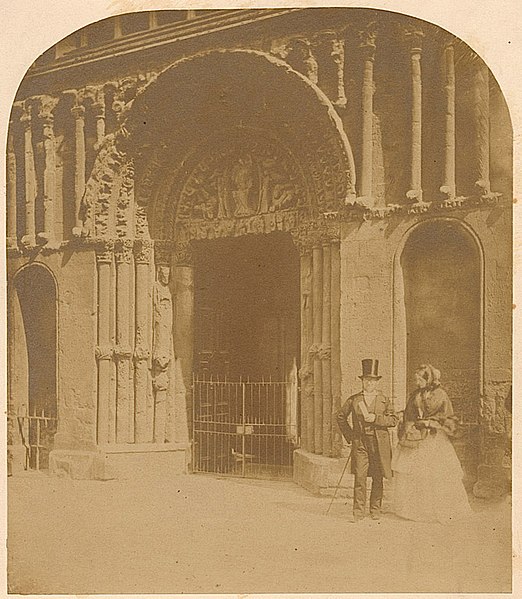
Frederick Scott Archer (1813–1856), Rochester Cathedral, England, early 1850s, albumen print from wet plate collodion negative, Department of Image Collections, National Gallery of Art Library, Washington, DC
The collodion process is an early photographic process. The collodion process, mostly synonymous with the "collodion wet plate process", requires the photographic material to be coated, sensitized, exposed, and developed within the span of about fifteen minutes, necessitating a portable darkroom for use in the field. Collodion is normally used in its wet form, but it can also be used in its dry form, at the cost of greatly increased exposure time. The increased exposure time made the dry form unsuitable for the usual portraiture work of most professional photographers of the 19th century. The use of the dry form was mostly confined to landscape photography and other special applications where minutes-long exposure times were tolerable.
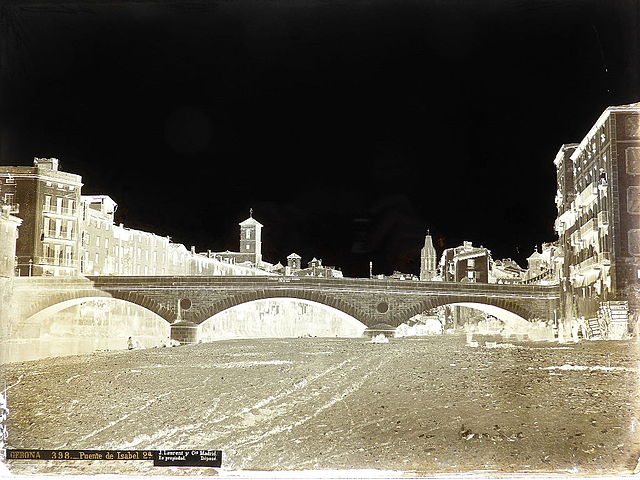
1867. Collodion wet plate process. GERONA.- Puente de Isabel II. Ministry of Education, Culture and Sport (Spain).
This deteriorated dry plate portrait of Theodore Roosevelt is similar to a wet plate image but has substantial differences.
A portable photography studio in 19th-century Ireland. The wet collodion process sometimes gave rise to portable darkrooms, as photographic images needed to be developed while the plate was still wet.
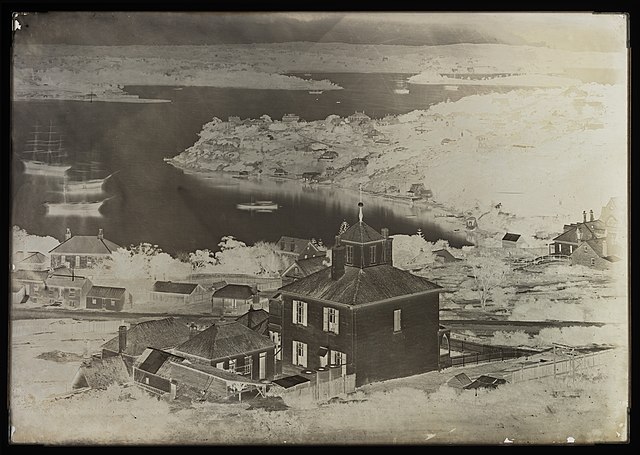
North Sydney and Sydney Harbour, by C Bayliss B Holtermann, 1875, colossal collodion glass-plate negative