Free imperial city
Videos
In the Holy Roman Empire, the collective term free and imperial cities, briefly worded free imperial city, was used from the fifteenth century to denote a self-ruling city that had a certain amount of autonomy and was represented in the Imperial Diet.
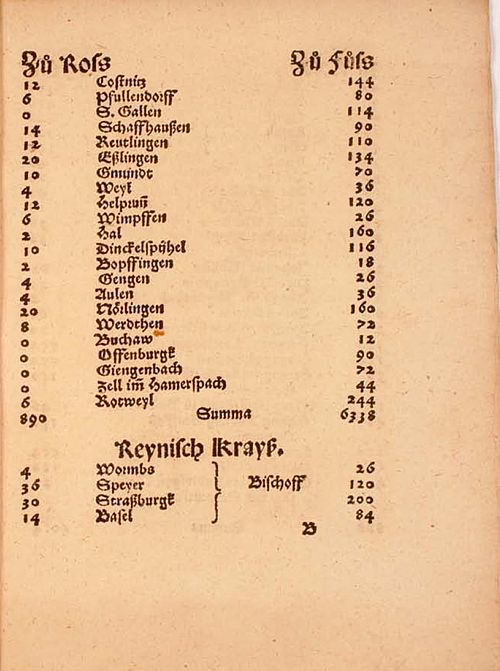
A partial list of the Free Imperial Cities of Swabia based on the Reichsmatrikel of 1521. It indicates the number of horsemen (left hand column) and infantry (right hand column) which each Imperial Estate had to contribute to the defence of the Empire.

Weissenburg-im-Nordgau in 1725
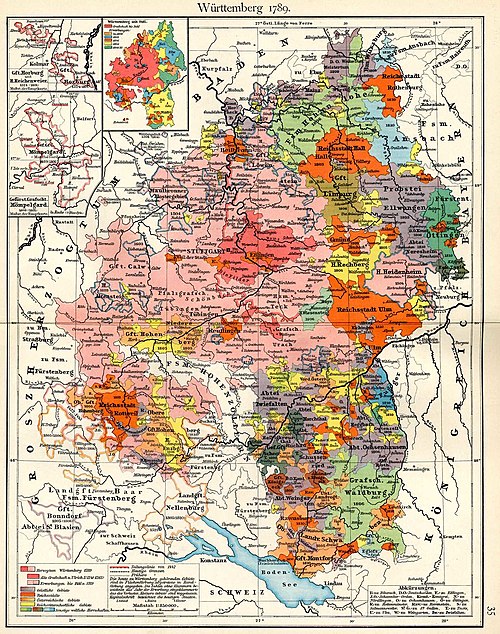
Württemberg more than doubled its size when it absorbed some 15 Free Cities (in orange) and other territories during the mediatisations of 1803 and 1806.
Prince-bishop
Videos
A prince-bishop is a bishop who is also the civil ruler of some secular principality and sovereignty, as opposed to Prince of the Church itself, a title associated with cardinals. Since 1951, the sole extant prince-bishop has been the Bishop of Urgell, Catalonia, who has remained ex officio one of two co-princes of Andorra, along with the French president.

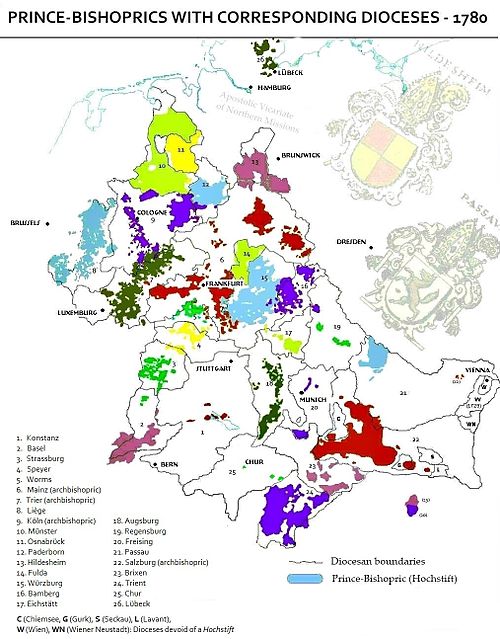
Ecclesiastical lands in the Holy Roman Empire, 1780