Furusiyya
Videos
Furūsiyya is an Arabic knightly discipline and ethical code developed in the Middle Ages. It was practised in the medieval Muslim world from Afghanistan to Muslim Spain, and particularly during the Cr

Illustration of a horse's ideal physical traits, 13th century manuscript of the Kitāb al-bayṭara by Aḥmad ibn ʿAtīq al-Azdī.

Muhammad ibn Yaqub al-Khuttuli: Kitab al-furusiyya wa’l-baitara (Horsemanship and Veterinary Book). Leiden University Library manuscript Or. 299 (1), 1343.

Late Mamluk / early Ottoman Egyptian horse armour (Egypt, c. 1550; Musée de l'Armée.

Late Mamluk-era manuscript on training with the lance (The David Collection Inv. nr. 19/2001, c. 1500).
Knight
Videos
A knight is a person granted an honorary title of a knighthood by a head of state or representative for service to the monarch, the church, or the country, especially in a military capacity.
Furusiyya
…Furūsiyya (Arabic: فروسية; also transliterated as furūsīyah, knighthood) is an Arabic knightly discipline and ethical code developed in the Middle Ages. It was practised in the medieval Muslim world from Afghanistan to…

A 14th-century depiction of the 13th-century German knight Hartmann von Aue, from the Codex Manesse
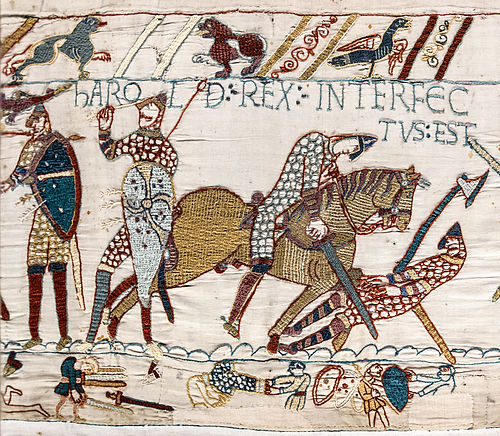
A Norman knight slaying Harold Godwinson (Bayeux Tapestry, c. 1070). The rank of knight developed in the 12th century from the mounted warriors of the 10th and 11th centuries.

Hungarian knights routing Ottoman sipahi cavalry during the Battle of Mohács in 1526

David I of Scotland knighting a squire