Galileo affair
Videos
The Galileo affair was an early 17th century political, religious, and scientific controversy regarding the astronomer Galileo Galilei's defence of heliocentrism, the idea that the Earth revolves arou

Photomontage of the Galilean moons. Galileo viewed these moons as a smaller Copernican system within the Solar System and used them to support heliocentrism.

Christian painting of God creating the cosmos (Bible Moralisee, French, 13th century)

The Council of Trent (1545–63) sitting in the Basilica di Santa Maria Maggiore. The Roman Inquisition suspected Galileo of violating the decrees of the council. Museo Diocesano Tridentino, Trento.

Pope Paul V (1552–1621), who ordered that the inquisitorial commission's 1616 judgement be delivered to Galileo by Cardinal Bellarmine (Caravaggio)
Pope Urban VIII
Videos
Pope Urban VIII, born Maffeo Vincenzo Barberini, was head of the Catholic Church and ruler of the Papal States from 6 August 1623 to his death, in July 1644. As pope, he expanded the papal territory b
Galileo affair
…banned and Galileo was ordered to abstain from holding, teaching or defending heliocentric ideas after the trial. The affair was complex, with Pope Urban VIII originally being a patron and supporter of Galileo before turning against him. Urban initially gave Galileo permission to publish on the Copernican…

Portrait by Pietro da Cortona, c. 1624–27 (oil on canvas, Capitoline Museums)

c. 1598 painting of Maffeo Barberini at age 30 by Caravaggio.

Gold quadrupla coin of Pope Urban VIII, struck at the Avignon mint, dated 1629
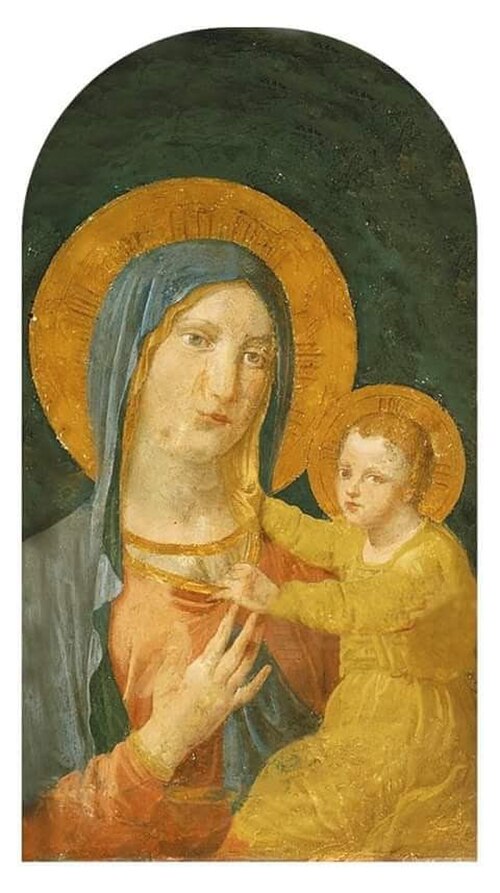
The icon of the La Madonna della Febbre which was crowned in 1631 making it as the first Marian image to receive a pontifical coronation.