Gelug
Videos
The Gelug is the youngest of the four major schools of Tibetan Buddhism. It was founded by Je Tsongkhapa, a Tibetan philosopher, tantric yogi and lama and further expanded and developed by his discipl
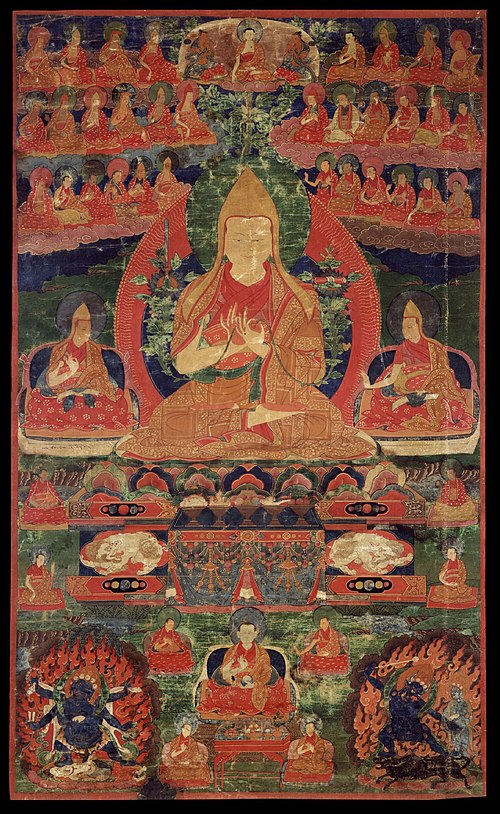
An illustration of Je Tsongkhapa, the founder, and his two principal students (Kédrup and Gyeltsap) on his left and right with other lineage teachers and protectors of the Gelug tradition

The 14th Dalai Lama (center), the most influential figure of the contemporary Gelug tradition, at the 2003 Kalachakra ceremony, Bodhgaya (India)

Khedrup Gelek Pelzang, 1st Panchen Lama (1385–1438 CE), the main leader of the Gelug school after Tsongkhapa's death

Gendun Drup, founder of Tashilhunpo Monastery, and the First Dalai Lama
Tibetan Buddhism
Videos
Tibetan Buddhism is a form of Buddhism practiced in Tibet, Bhutan, and Mongolia. It also has a sizable number of adherents in the areas surrounding the Himalayas, including the Indian regions of Ladak
Gelug
…The Gelug (, also Geluk; lit. 'virtuous') is the youngest of the four major schools of Tibetan Buddhism. It was founded by Je Tsongkhapa (1357–1419), a Tibetan philosopher, tantric yogi and lama and further expanded and developed by his disciples (such…

Inside of a Tibetan Buddhist monastery

Samye was the first gompa (Buddhist monastery) built in Tibet (775–779).

The Indian master Atiśa

The Tibetan householder and translator Marpa (1012–1097)