The gene-centered view of evolution, also known as the selfish gene theory, holds that adaptive evolution occurs through the differential survival of competing genes, increasing the allele frequency o
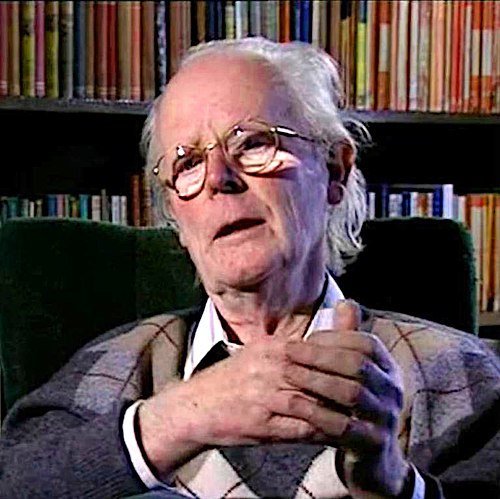
John Maynard Smith

Richard Dawkins

Darwin's finches by Gould
Group selection
Videos
Group selection is a proposed mechanism of evolution in which natural selection acts at the level of the group, instead of at the level of the individual or gene.
Gene-centered view of evolution
…Dennett. The gene-centric view has been opposed by Ernst Mayr, Stephen Jay Gould, David Sloan Wilson, and philosopher Elliott Sober. An alternative, multilevel selection (MLS), has been advocated by E. O. Wilson, David Sloan Wilson, Sober, Richard E. Michod, and Samir Okasha. Writing in the New York Review of Books…

Early explanations of social behaviour, such as the lekking of blackcock, spoke of "the good of the species". Blackcocks at the Lek watercolour and bodycolour by Archibald Thorburn, 1901.

David Sloan Wilson and Elliott Sober's 1994 Multilevel Selection Model, illustrated by a nested set of Russian matryoshka dolls. Wilson himself compared his model to such a set.

Social behaviour in honeybees looked a good candidate for group selection, but is explained by kin selection: their haplodiploid inheritance system makes workers very closely related to their queen (centre).

Humanity has developed extremely rapidly, arguably through gene-culture coevolution, leading to complex cultural artefacts like the gopuram of the Sri Mariammam temple, Singapore.