Geological history of Mars
Videos
The geological history of Mars follows the physical evolution of Mars as substantiated by observations, indirect and direct measurements, and various inference techniques. Methods dating back to 17th-
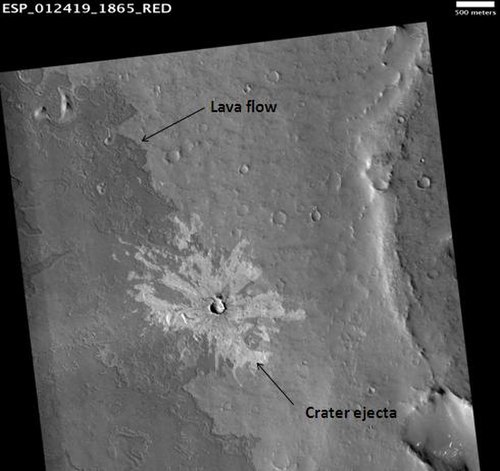
HiRISE image illustrating Steno's law of superposition. The dark-toned lava flow overlies (is younger than) the light-toned terrain at right. The ejecta of the crater at centre overlies both units, indicating that the crater is younger than both units.

Artist's impression of Mars four billion years ago
Mars
Videos
Mars is the fourth planet from the Sun. It is also known as the "Red Planet", for its orange-red appearance. Mars is a desert-like rocky planet with a tenuous atmosphere that is primarily carbon dioxi
Geological history of Mars
…The geological history of Mars follows the physical evolution of Mars as substantiated by observations, indirect and direct measurements, and various inference techniques. Methods dating back to 17th-century techniques…
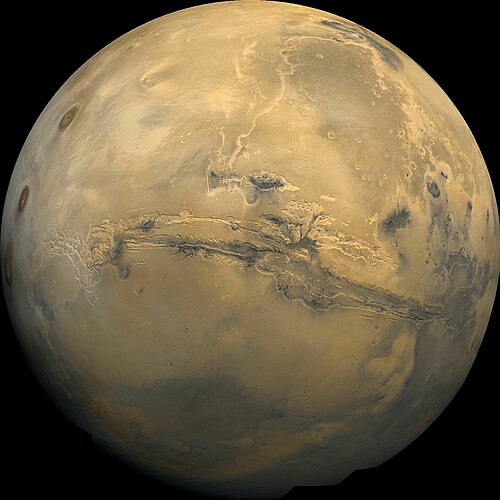
Valles Marineris, taken by the Viking 1 probe

Artist concept showing sand-laden jets erupting from Martian geysers (published by NASA; artist: Ron Miller)

A 30 meter wide and 800 meter high dust devil. Dust devils of 20 kilometer height have been observed.

Dust devils cause twisting dark trails on the Martian surface