German invasion of Greece
Videos
The German invasion of Greece or Operation Marita, were the attacks on Greece by Italy and Germany during World War II. The Italian invasion in October 1940, which is usually known as the Greco-Italia

Australian soldiers in Alexandria, Egypt, embarking for Greece
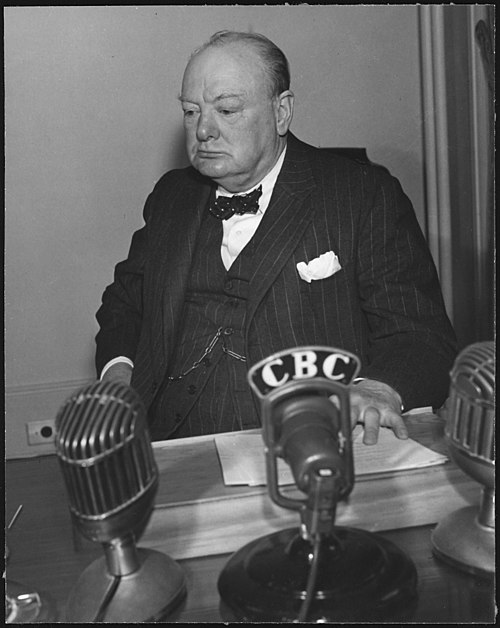
Winston Churchill believed it was vital for the United Kingdom to take every measure possible to support Greece. On 8 January 1941, he stated that "there was no other course open to us but to make certain that we had spared no effort to help the Greeks who had shown themselves so worthy."

Lieutenant General Sir Thomas Blamey, commander of Australian I Corps, Lieutenant General Sir Henry Maitland Wilson, commanding general of the Empire expeditionary force ('W' Force) and Major General Bernard Freyberg, commander of the New Zealand 2nd Division, in 1941 in Greece

German infantry in Greece
The Balkans campaign of World War II began with the Italian invasion of Greece on 28 October 1940. In the early months of 1941, Italy's offensive had stalled and a Greek counter-offensive pushed into
German invasion of Greece
…German landings on the island of Crete (May 1941) came after Allied forces had been defeated in mainland Greece. These battles were part of the greater Balkans Campaign of the Axis powers and their associates. Following the Italian invasion on 28 October 1940, Greece, with British air and material support, repelled the…

German paratroopers on Crete in 1941

Italian soldiers entering Yugoslavia
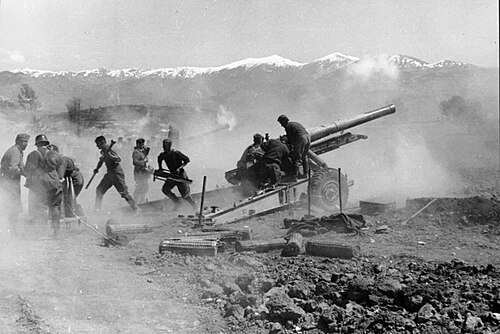
German artillery firing during the advance through Greece