Goods wagons of welded construction
Goods wagons of welded construction were developed and built by the Deutsche Reichsbahn in Germany from 1933 to about 1945. With the introduction of welding technology in 1933 almost all wagon components were joined by welding and no longer by rivetting. This enabled goods wagons to be designed, for example, for higher speeds or for higher payloads through the use of different types of steel and other engineering changes, but their further development was so heavily influenced by the exigencies of the Second World War that, as early as 1939, the Deutsche Reichsbahn had to temper the design of goods wagons to the new economic circumstances. Because there were overlaps in the change from the Austauschbauart - goods wagons made with interchangeable components - to the new welded classes, the period of the changeover cannot be exactly defined. Several standard goods wagons and their classes are covered in other articles. Goods wagons built during the Second World War that were purely intended for military transport use, are covered under the article on Kriegsbauart - wartime classes.

Covered wagon of the "Gs Oppeln" class
Goods wagons or freight wagons, also known as goods carriages, goods trucks, freight carriages or freight trucks, are unpowered railway vehicles that are used for the transportation of cargo. A variety of wagon types are in use to handle different types of goods, but all goods wagons in a regional network typically have standardized couplers and other fittings, such as hoses for air brakes, allowing different wagon types to be assembled into trains. For tracking and identification purposes, goods wagons are generally assigned a unique identifier, typically a UIC wagon number, or in North America, a company reporting mark plus a company specific serial number.
Hbillns wagon with sliding sides in ITL’s green livery
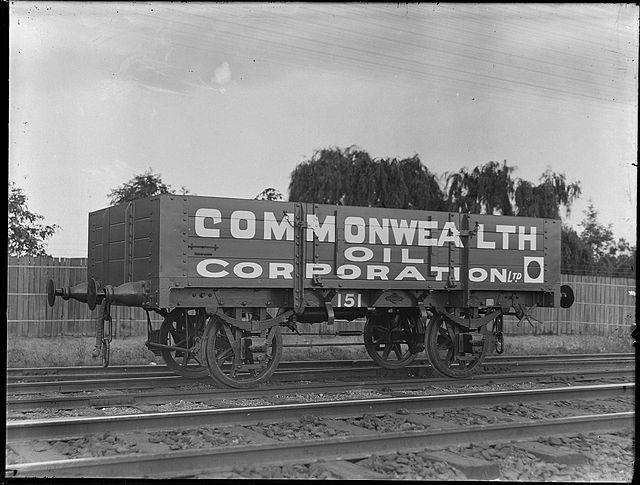
Commonwealth Oil Corporation goods wagon in Australia
Range of goods wagons at Kornwestheim marshalling yard
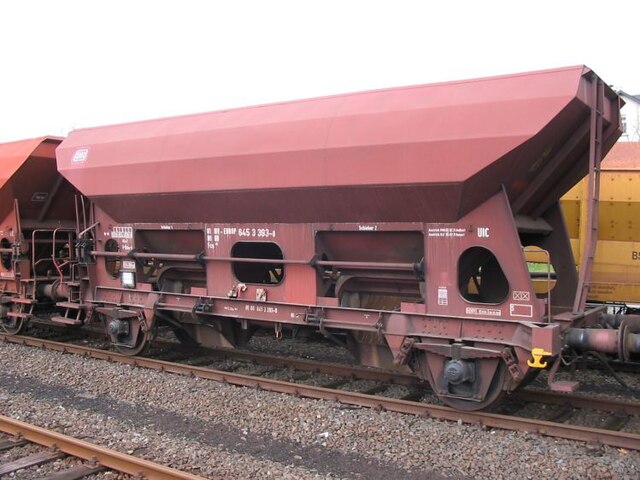
The side-discharging Class Fcs092 became the UIC standard for the transportation of coarse-grained goods