Gothic Revival architecture
Videos
Gothic Revival is an architectural movement that after a gradual build-up beginning in the second half of the 17th century became a widespread movement in the first half of the 19th century, mostly in

Sint-Petrus-en-Pauluskerk in Ostend (Belgium), built between 1899 and 1908

The Cathedral of St. John the Baptist, Savannah, Georgia, United States

Tom Tower, Oxford, by Sir Christopher Wren 1681–1682, to match the Tudor surroundings

Pilgrimage Church of Saint John of Nepomuk by Johann Santini Aichel (around 1720), Czech Republic, historic Moravia
Gothic architecture
Videos
Gothic architecture is an architectural style prevalent in Europe from the late 12th to the 16th century, during the High and Late Middle Ages, surviving into the 17th and 18th centuries in some areas
Gothic Revival architecture
…a widespread movement in the first half of the 19th century, mostly in England. Increasingly serious and learned admirers sought to revive medieval Gothic architecture, intending to complement or even supersede the neoclassical styles prevalent at the time. Gothic Revival draws upon features of medieval examples…
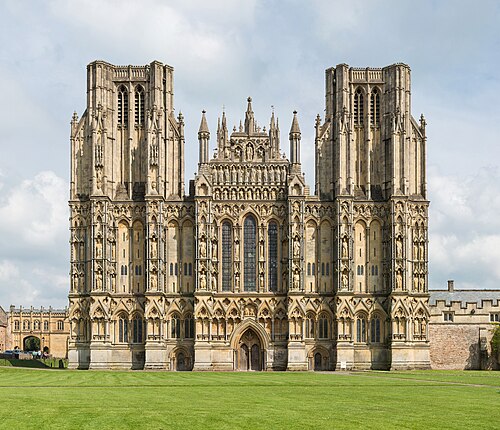
Wells Cathedral West Front Exterior, UK Diliff

Sainte Chapelle Interior Stained Glass

Rouen Cathédrale Primatiale Notre Dame de l'Assomption Fassade Mittelportal Tympanon 2

Pointed arches in the 14th-century tower of the church of San Salvador at Teruel in Aragon