Gothic fiction
Videos
Gothic fiction, often referred to as Gothic horror, is a literary aesthetic of fear and haunting. The name of the genre is derived from the Renaissance-era use of the word "gothic", as a pejorative te
Mary Shelley's Frankenstein; or, The Modern Prometheus (1818) has come to define Gothic fiction in the Romantic period. Frontispiece to 1831 edition shown, featuring Victor Frankenstein fleeing in disgust from his monster.


The ruins of Wolf's Crag castle in Walter Scott's The Bride of Lammermoor (1819)

Strawberry Hill, southwest London, an English villa in the "Gothic Revival" style, built by Gothic writer Horace Walpole

The Gothic Temple folly in Stowe Gardens, Buckinghamshire, built as a ruin in 1741, designed by James Gibbs
Frankenstein
Videos
Frankenstein; or, The Modern Prometheus is an 1818 Gothic novel written by English author Mary Shelley. It tells the story of Victor Frankenstein, a young scientist who creates a sapient creature from
Gothic fiction
…and John William Polidori at the Villa Diodati on the banks of Lake Geneva in the summer of 1816. This occasion was productive of both Mary Shelley's Frankenstein, or, The Modern Prometheus (1818), and Polidori's short story "The Vampyre" (1819), featuring the Byronic Lord Ruthven. "The Vampyre" has been accounted by cultural critic…

Title page of Vol. I, first edition, 1818
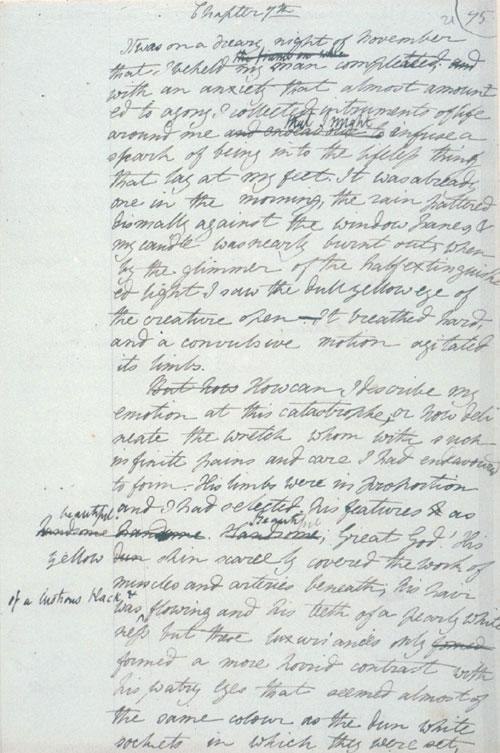
Draft of Frankenstein ("It was on a dreary night of November that I beheld my man completed ...")

An English editorial cartoonist conceives the Irish Fenian movement as akin to Frankenstein's creature, in the wake of the Phoenix Park murders in an 1882 issue of Punch.