Gravity of Earth
Videos
The gravity of Earth, denoted by g, is the net acceleration that is imparted to objects due to the combined effect of gravitation and the centrifugal force. It is a vector quantity, whose direction co

Earth's gravity measured by NASA GRACE mission, showing deviations from the theoretical gravity of an idealized, smooth Earth ellipsoid. The deviations toward stronger gravity are colored red; deviations toward weaker gravity are colored blue.

Earth's radial density distribution according to the Preliminary Reference Earth Model (PREM).

A plumb bob determines the local vertical direction
Gravity
Videos
In physics, gravity, also known as gravitation or a gravitational interaction, is a fundamental interaction, which may be described as the force that draws material objects towards each other.
Gravity of Earth
…The gravity of Earth, denoted by g, is the net acceleration that is imparted to objects due to the combined effect of gravitation (from mass distribution within Earth) and the centrifugal force (from the Earth's rotation). It is a vector quantity, whose direction coincides with a…
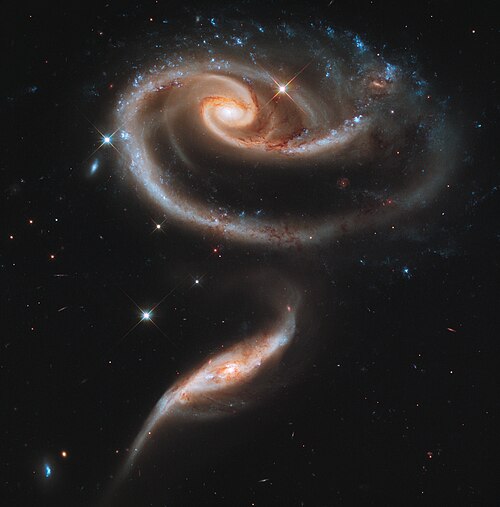
The shapes of two massive galaxies in this image evolved under the effects of gravity.
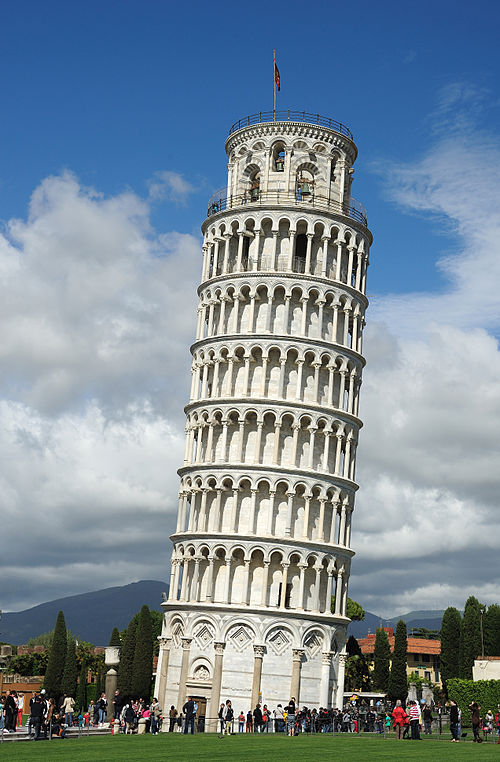
The Leaning Tower of Pisa, where according to legend Galileo performed an experiment about the speed of falling objects

English physicist and mathematician, Sir Isaac Newton (1642–1727)
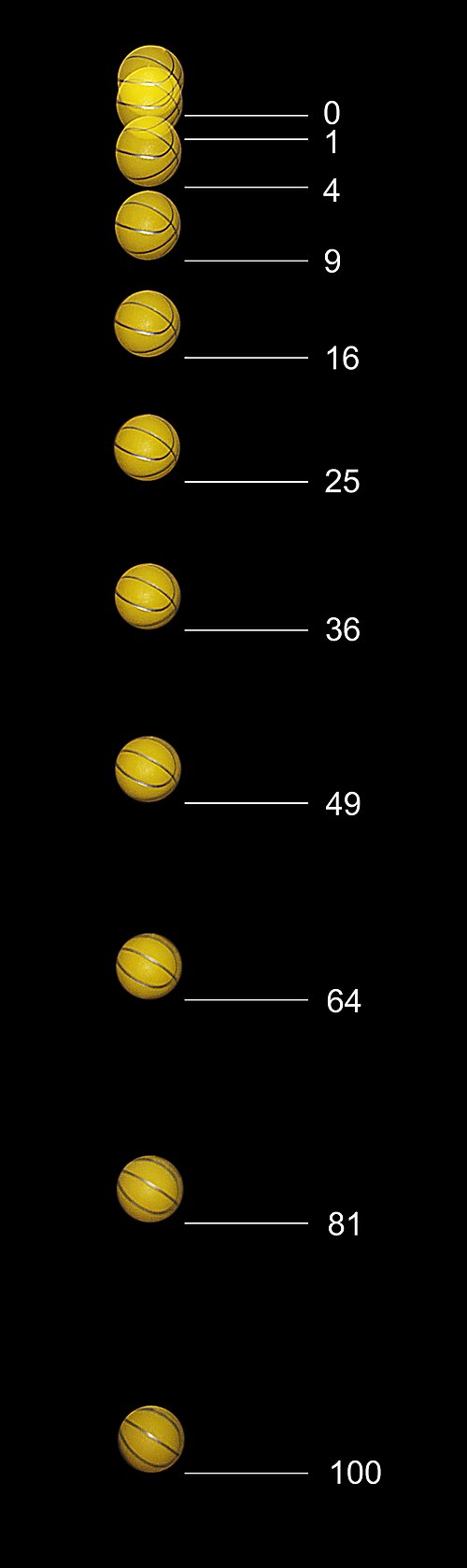
An initially-stationary object that is allowed to fall freely under gravity drops a distance that is proportional to the square of the elapsed time. This image spans half a second and was captured at 20 flashes per second.