Greco-Roman mysteries
Videos
Mystery religions, mystery cults, sacred mysteries or simply mysteries, were religious schools of the Greco-Roman world for which participation was reserved to initiates. The main characteristic of th

Hydria by the Varrese Painter (c. 340 BCE) depicting Eleusinian scenes

The central iconographical component of the mysteries depicts Mithras slaying a bull.
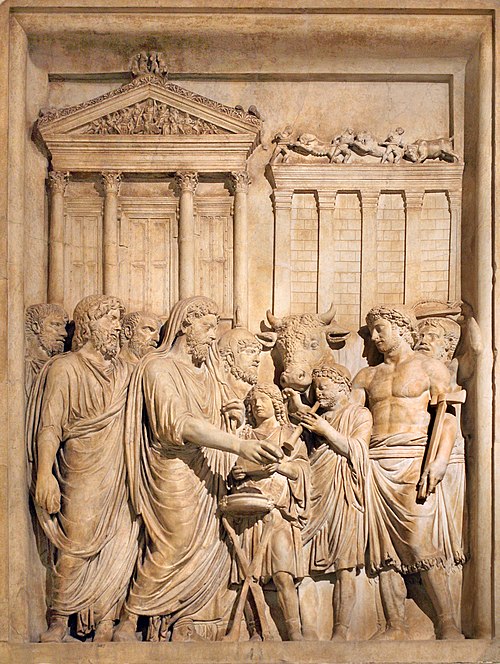
Bas relief from Arch of Marcus Aurelius showing sacrifice
Mithraism
Videos
Mithraism, also known as the Mithraic mysteries or the Cult of Mithras, was a Roman mystery religion focused on the god Mithras. Although inspired by Iranian worship of the Zoroastrian divinity Mithra
Greco-Roman mysteries
…Antiquity; Emperor Julian, of the mid-4th century, is believed by some scholars to have been associated with various mystery cults—most notably the mithraists. Due to the secret nature of the schools, and because the mystery religions of Late Antiquity were persecuted by the Christian Roman Empire from the…

Mithras killing the bull, c. 150 CE; Louvre-Lens

Double-faced Mithraic relief. Fiano Romano (Rome), 2nd to 3rd century CE, Louvre Museum.

Rock-born Mithras and Mithraic artifacts, Baths of Diocletian, Rome

A bas-relief of the tauroctony of the mysteries, Metz, France