Greek mythology
Videos
Greek mythology is the body of myths originally told by the ancient Greeks, and a genre of ancient Greek folklore, today absorbed alongside Roman mythology into the broader designation of classical my

Achilles and Penthesileia by Exekias, c. 540 BC, British Museum, London
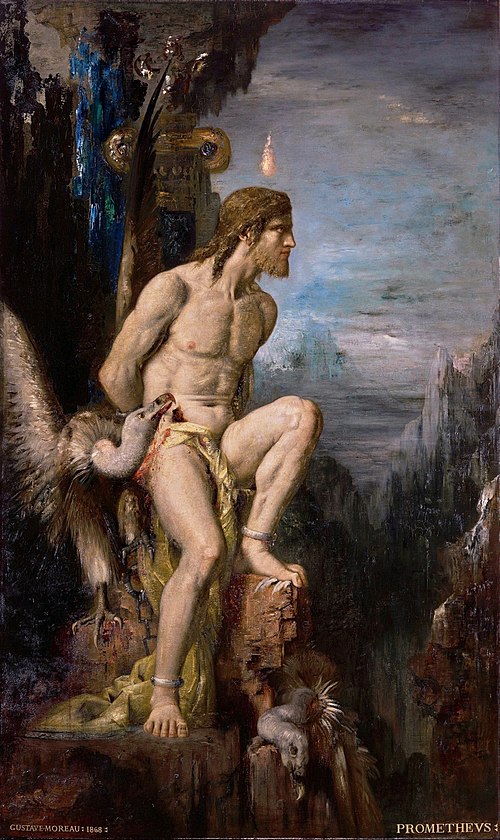
Prometheus (1868 by Gustave Moreau). The myth of Prometheus first was attested by Hesiod and then constituted the basis for a tragic trilogy of plays, possibly by Aeschylus, consisting of Prometheus Bound, Prometheus Unbound, and Prometheus Pyrphoros.
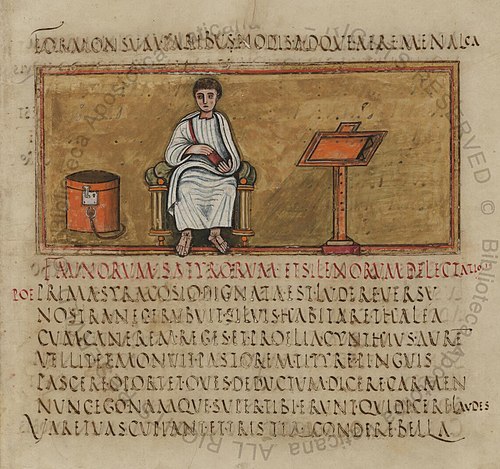
The Roman poet Virgil, here depicted in the fifth-century manuscript, the Vergilius Romanus, preserved details of Greek mythology in many of his writings.

Phaedra with an attendant, probably her nurse, a fresco from Pompeii, c. 60 – c. 20 BC
Odyssey
Videos
The Odyssey is one of two major epics of ancient Greek literature attributed to Homer. It is one of the oldest surviving works of literature and remains popular with modern audiences. Like the Iliad,
Greek mythology
…BC; eventually the myths of the heroes of the Trojan War and its aftermath became part of the oral tradition of Homer's epic poems, the Iliad and the Odyssey. Two poems by Homer's near contemporary Hesiod, the Theogony and the Works and Days, contain accounts of the genesis of the world, the succession of…

Oldest-known manuscript fragment of the Odyssey, produced in Ptolemaic Egypt during the 3rd century BC and unearthed in Medinet Ghoram

Terracotta plaque of the Mesopotamian ogre Humbaba, believed to be a possible inspiration for the figure of Polyphemus

A mosaic depicting Odysseus, from the villa of La Olmeda, Pedrosa de la Vega, Spain, late 4th–5th centuries AD

Odysseus and his soldiers fighting the Cicones —allies of the Trojans— during the sacking of their city. After seizing goods and women, Odysseus is driven back by allies of the Cicones.