Grotesque
Videos
Grotesque is an adjective often used to describe weird shapes and distorted forms such as Halloween masks. In art, performance, and literature, however, grotesque may also refer to something that simu
Grotesque studies, Michelangelo.


Roman frescos in Nero's Domus Aurea, Rome, unknown painter, c. 64–68 AD.
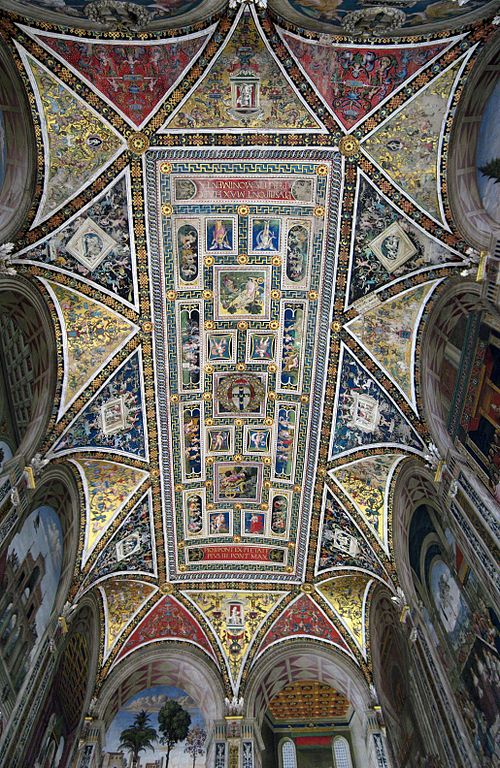
Ceiling of the Piccolomini Library, Siena Cathedral, Siena, Italy, by Pinturicchio and his assistants, 1502–1503.

Pilgrim bottle, by the Fontana workshop from Urbino, Italy, c. 1560–1570, tin glazed earthenware (majolica), Victoria and Albert Museum, London
Domus Aurea
Videos
The Domus Aurea was a vast landscaped complex built by the Emperor Nero largely on the Oppian Hill in the heart of ancient Rome after the great fire in 64 AD had destroyed a large part of the city.
Grotesque
…the walls of basements of ruins in Rome that were called at that time le Grotte ('the caves'). These 'caves' were in fact rooms and corridors of the Domus Aurea, the unfinished palace complex started by Nero after the Great Fire of Rome in AD 64, which had become overgrown and buried, until they were broken…

Fresco from the Golden House of Nero, removed in 1668. The painting has considerable over-painting and is not in its original state.

Overlay of Trajan's baths on the Oppian Hill

Opus sectile from the Domus Aurea

Reconstruction of the "golden vault" by Vincenzo Brenna