Gruel is a food consisting of some type of cereal—such as ground oats, wheat, rye, or rice—heated or boiled in water or milk. It is a thinner version of porridge that may be more often drunk rather than eaten. Historically, gruel has been a staple of the Western diet, especially for peasants. Gruel may also be made from millet, hemp, barley, or, in hard times, from chestnut flour or even the less bitter acorns of some oaks. Gruel has historically been associated with feeding the sick and recently-weaned children.
Third-class menu aboard RMS Titanic dated 14 April 1912, showing gruel as part of the menu offering
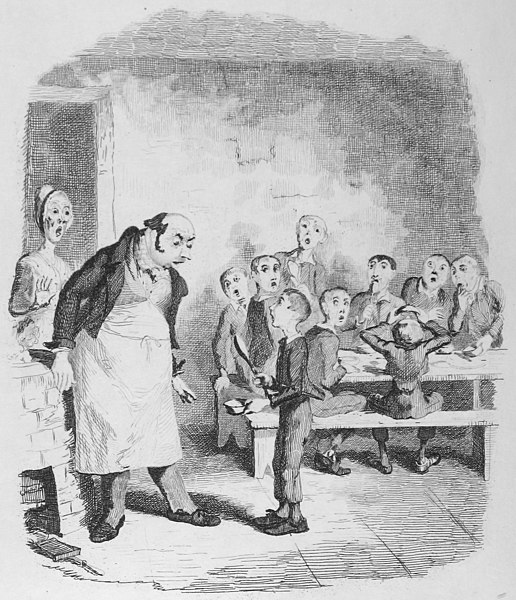
"Oliver asking for more", an engraving in The Writings of Charles Dickens volume 4, published 1894.
Wheat is a grass widely cultivated for its seed, a cereal grain that is a worldwide staple food. The many species of wheat together make up the genus Triticum ; the most widely grown is common wheat. The archaeological record suggests that wheat was first cultivated in the regions of the Fertile Crescent around 9600 BC. Botanically, the wheat kernel is a caryopsis, a type of fruit.
Wheat
A: Plant; B ripe ear of corn; 1 spikelet before flowering; 2 the same, flowering and spread, enlarged; 3 flowers with glumes; 4 stamens 5 pollen; 6 and 7 ovaries with juice scales; 8 and 9 parts of the scar; 10 fruit husks; 11, 12, 13 seeds, natural size and enlarged; 14 the same cut up, enlarged.
Sickles with stone microblades were used to harvest wheat in the Neolithic period, c. 8500–4000 BC
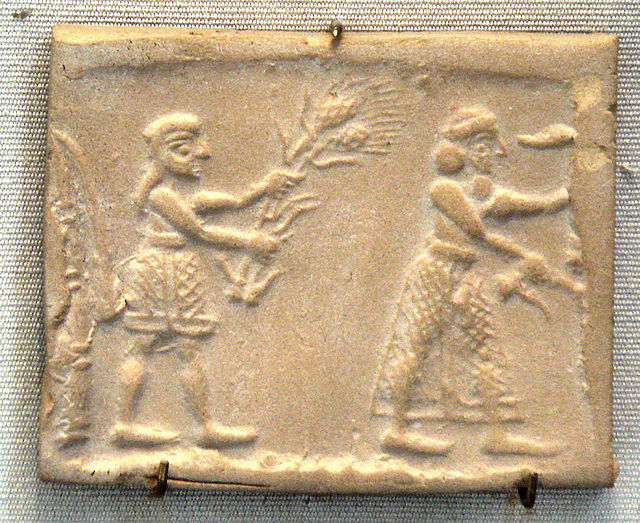
Sumerian cylinder seal impression dating to c. 3200 BC showing an ensi and his acolyte feeding a sacred herd wheat stalks; Ninurta was an agricultural deity and, in a poem known as the "Sumerian Georgica", he offers detailed advice on farming