Hachiman shrine
Videos
A Hachiman shrine is a Shinto shrine dedicated to the kami Hachiman. It is the second most numerous type of Shinto shrine after those dedicated to Inari Ōkami. There are about 44,000 Hachiman shrines.

Iwashimizu Hachimangū, a Hachiman shrine in Yawata, Kyoto.
Inari Ōkami
Videos
Inari Ōkami, also called Ō-Inari, is the Japanese kami of foxes, fertility, rice, tea, sake, agriculture and industry, and general prosperity and worldly success, and is one of the principal kami of S
Hachiman shrine
…also Hachimangū (八幡宮)) is a Shinto shrine dedicated to the kami Hachiman. It is the second most numerous type of Shinto shrine after those dedicated to Inari Ōkami (see Inari shrine). There are about 44,000 Hachiman shrines. Originally the name 八幡 was read Yawata or Yahata, a reading still used in some cases. Many…
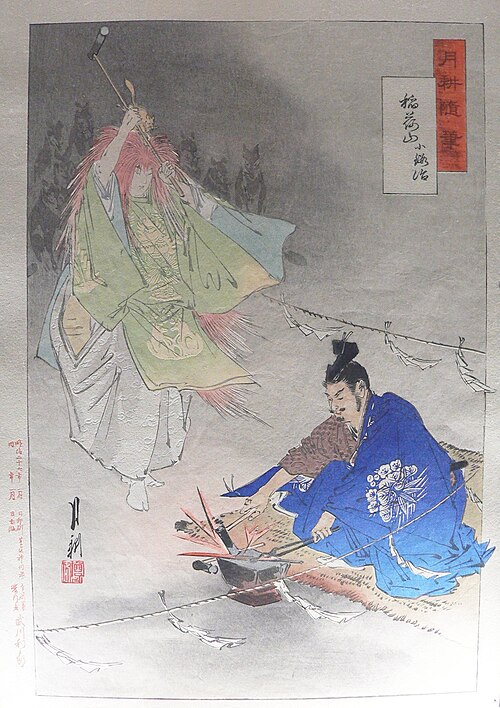
Inari and their fox spirits help the blacksmith Munechika forge the blade kogitsune-maru (Little Fox) in the late 10th century. This legend is the subject of the noh drama Sanjo Kokaji.
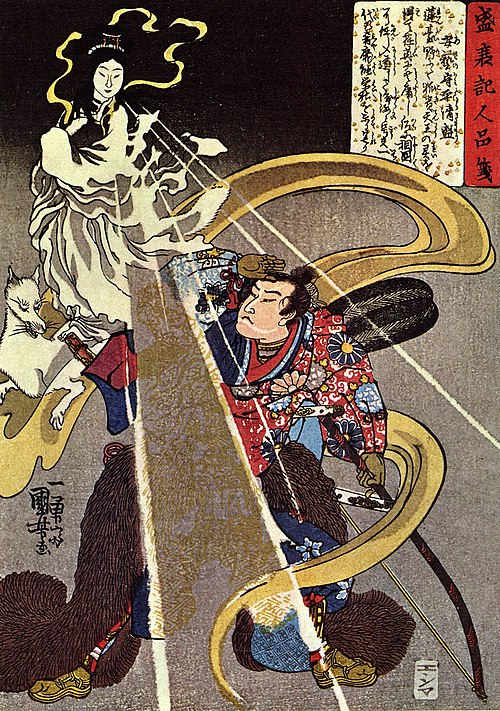
Inari appears to a warrior. This portrayal of Inari shows the influence of Dakiniten concepts from Buddhism.

The Hokkaido red fox
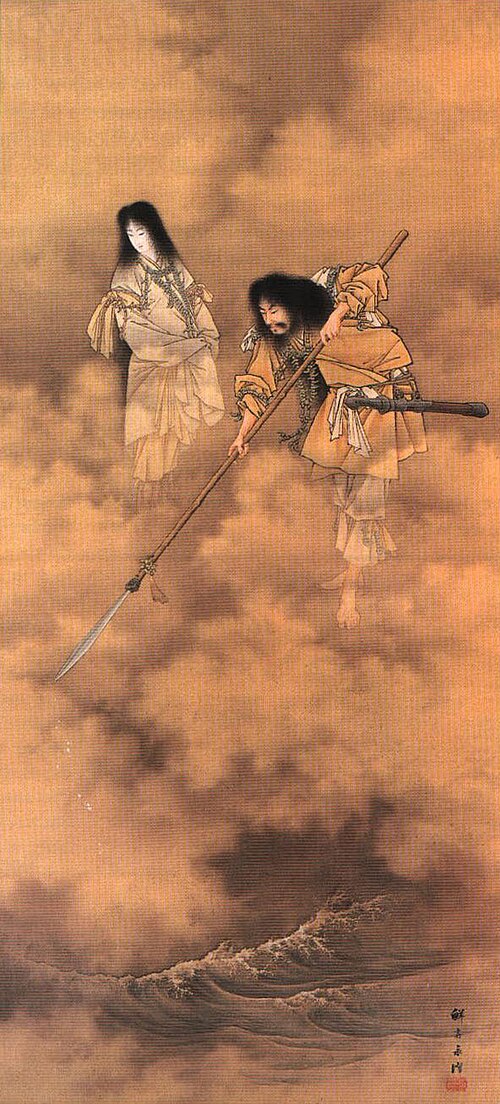
Searching the Seas with the Tenkei (天瓊を以て滄海を探るの図, Tenkei o motte sōkai o saguru no zu). Painting by Kobayashi Eitaku, 1880–1890 (MFA, Boston). Izanagi to the right, Izanami to the left.