Inari Ōkami
Videos
Inari Ōkami, also called Ō-Inari, is the Japanese kami of foxes, fertility, rice, tea, sake, agriculture and industry, and general prosperity and worldly success, and is one of the principal kami of S
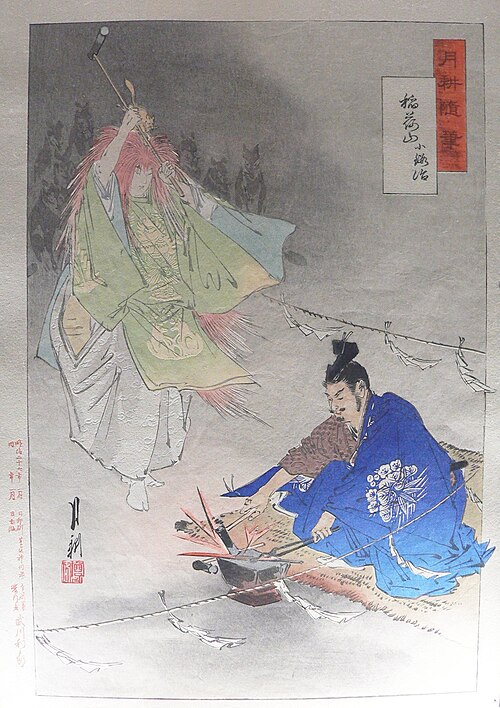
Inari and their fox spirits help the blacksmith Munechika forge the blade kogitsune-maru (Little Fox) in the late 10th century. This legend is the subject of the noh drama Sanjo Kokaji.
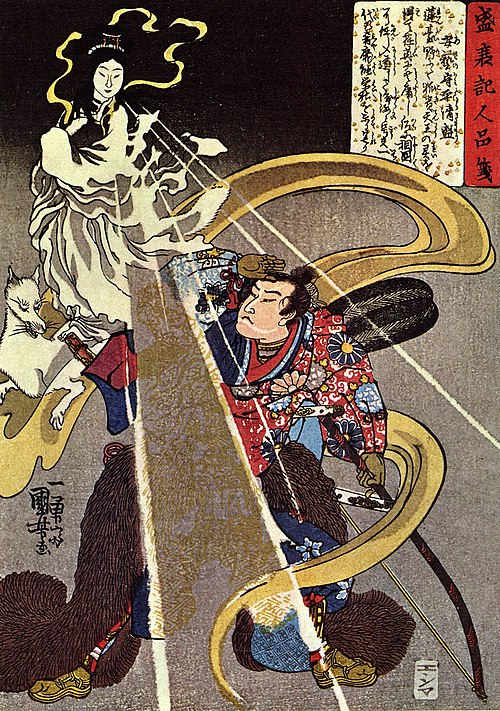
Inari appears to a warrior. This portrayal of Inari shows the influence of Dakiniten concepts from Buddhism.

The Hokkaido red fox
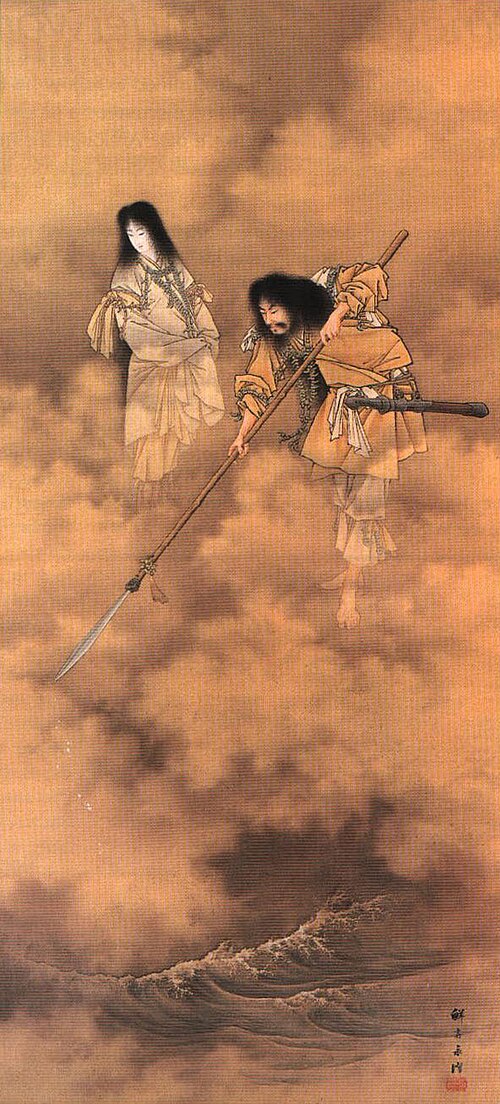
Searching the Seas with the Tenkei (天瓊を以て滄海を探るの図, Tenkei o motte sōkai o saguru no zu). Painting by Kobayashi Eitaku, 1880–1890 (MFA, Boston). Izanagi to the right, Izanami to the left.
Dakini
Videos
A dakini is a type of goddess in Hinduism and Buddhism.
Inari Ōkami
…as the Shinto female deity, Toyouke. Some take Inari to be identical to any grain kami. Inari's female aspect is often identified or conflated with Dakiniten, a Buddhist deity who is a Japanese transformation of the Indian dakini, or with Benzaiten of the Seven Lucky Gods. Dakiniten is portrayed as a female…

Tibetan board carving of the ḍākinī Vajrayogini

Temple banner depicting a dancing bodhisattva flanked by bird-headed dakinis (Art Institute of Chicago)

The goddess Kālī flanked by Ḍākinī and Yoginī

The ḍākinīs in the Womb Realm Mandala