Halizah
Videos
Halitsah or chalitzah in Rabbinical Judaism is the process by which a childless widow and a brother of her deceased husband may avoid the duty to marry under the biblical system of yibbum.

Engraving of a chalitza ceremony

A halitzah shoe, New York, 20th century, in the Bata Shoe Museum

19th century Halizah shoe, Jewish Museum of Switzerland

Marriage contract of Esther Solomon and Benjamin Levy, Wellington, New Zealand, 1 June 1842, witnessed by Alfred Hort and Nathaniel William Levin
Yibbum
Videos
Yibbum is the form of levirate marriage found in Judaism. As specified by Deuteronomy 25:5–10, the brother of a man who died without children is permitted and encouraged to marry the widow. However, i
Halizah
…Judaism is the process by which a childless widow and a brother of her deceased husband may avoid the duty to marry under the biblical system of yibbum (levirate marriage). The process involves the widow making a declaration, taking off a shoe of the brother (i.e., her brother-in-law), and spitting on…
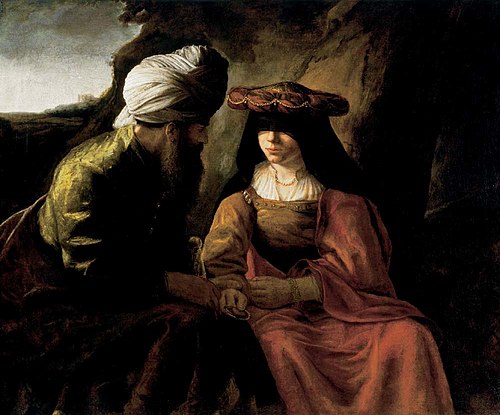
Judah and Tamar, by school of Rembrandt (1650s). An early example of a levirate-type practice is the biblical story of Judah and Tamar

The Widow (1882-83) by Anders Zorn. The widow has to remain unmarried until yibbum or halizah has been performed.

19th century Ketuba or Yibbum from New Zealand, including a promise to take care of the bride if the husband dies before any children are born.