Hasan-Jalalyan
Videos
Hasan-Jalalyan is a medieval Armenian dynasty that ruled over parts of the South Caucasus. From the early thirteenth century, the family held sway in Khachen in what are now the regions of lower Karab
Depiction of Hasan-Jalal Dawla, Gandzasar monastery, 1238


The Gandzasar monastery in present-day Martakert, which went on to serve as the family sepulcher and religious See, was completed in 1240.

The Gandzasar Zhamatun, dedicated by Hasan-Jalalyan in 1261.

The remains of Hasan-Jalal's fortress of Khokhanaberd, as seen from Gandzasar, are on the mountain on the left.
Nagorno-Karabakh
Videos
Nagorno-Karabakh is a region located within the territory of present-day Azerbaijan, covering the southeastern stretch of the Lesser Caucasus mountain range. Part of the greater region of Karabakh, it
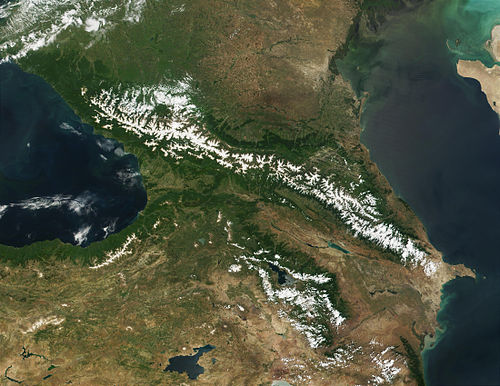
June 2001 NASA photograph of the snow-covered Lesser Caucasus to the south of the Greater Caucasus. Around the year 1800, the Karabakh Khanate was based in the southeast corner of the Lesser Caucasus. It extended east into the lowlands, hence the name Nagorno- or "Highland-" Karabakh for the western part.

The Amaras Monastery, founded in the 4th century by St Gregory the Illuminator. In the 5th century, Mesrop Mashtots, inventor of the Armenian alphabet, established at Amaras the first school to use his script.

The monastery at Gandzasar was commissioned by the House of Khachen and completed in 1238
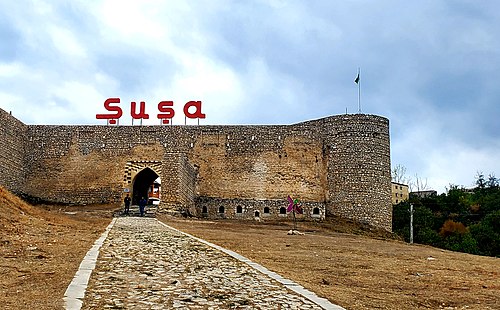
The Shusha fortress, built by the Karabakh Khanate ruler Panah Ali Khan in the 18th century