Hatha yoga
Videos
Hatha yoga is a branch of yoga that uses physical techniques to try to preserve and channel vital force or energy. The Sanskrit word हठ literally means "force", alluding to a system of physical techni

Haṭha yoga's components include from top left to bottom right Shatkarmas (purifications, here Nauli), Asanas (postures, here Mayurasana, Peacock Pose), Mudras (manipulations of vital energy, here Viparita Karani), Pranayama (breath control, here Anuloma Viloma).
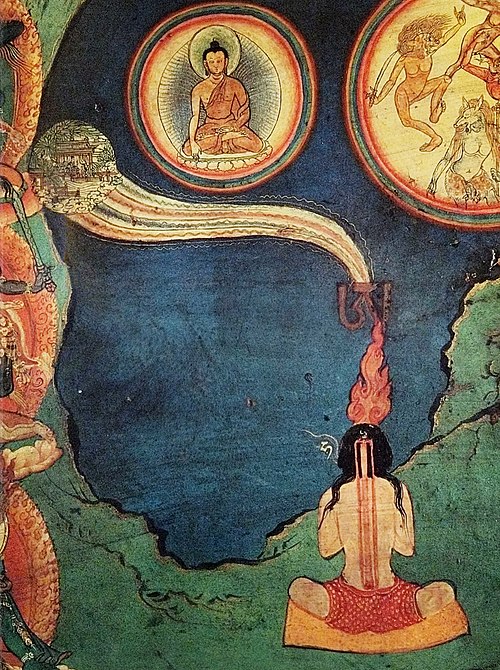
Tibetan depiction of Tummo (candali, inner heat) practice showing the central channel, the sushumna

A folio of a medieval copy of the Amṛtasiddhi, written bilingually in Sanskrit and Tibetan

18th century yoginis in Rajasthan
Yoga
Videos
Yoga is a group of physical, mental, and spiritual practices or disciplines that originated with its own philosophy in ancient India, aimed at controlling body and mind to attain liberation, as practi
Hatha yoga
…Hatha yoga (; Sanskrit: हठयोग, romanized: haṭhayoga) is a branch of yoga that uses physical techniques to try to preserve and channel vital force or energy. The Sanskrit word हठ (haṭha) literally means "force", alluding to…

Statue of Shiva performing yoga in the lotus position

A statue of Patanjali, author of the Yoga Sutras of Patanjali, meditating in the lotus position
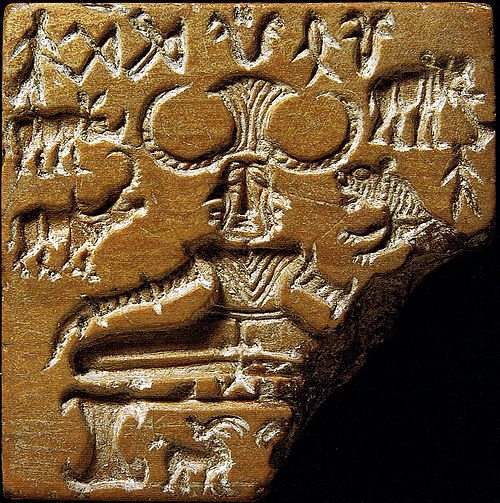
The Pashupati seal from the Indus Valley Civilisation (3300 BCE) shows a seated figure, surrounded by animals, in a posture that was thought by 20th century scholars to be Mulabandhasana. This is rejected by more recent scholars.

Bas-relief in Borobudur of the Buddha becoming a wandering hermit instead of a warrior