He Whakaputanga
Videos
He Whakaputanga, also known as the Declaration of the Independence of New Zealand is a document signed in 1835 by a number of Māori chiefs of the northern parts of New Zealand setting out the independ
The first page of He Whakaputanga


The flag as drawn by Nicholas Charles Phillips of the man-of-war HMS Alligator in 1834
Treaty of Waitangi
Videos
The Treaty of Waitangi, sometimes referred to as Te Tiriti, is a document of importance to the history of New Zealand, and its national identity. The cornerstone legislative recognition of the Treaty
He Whakaputanga
…document signed in 1835 by a number of Māori chiefs of the northern parts of New Zealand setting out the independence of their country. It preceded the Treaty of Waitangi, which was signed in 1840. On 28 October 1835, with James Busby, the British Resident in New Zealand, He Whakaputanga was signed by 34 northern Māori…
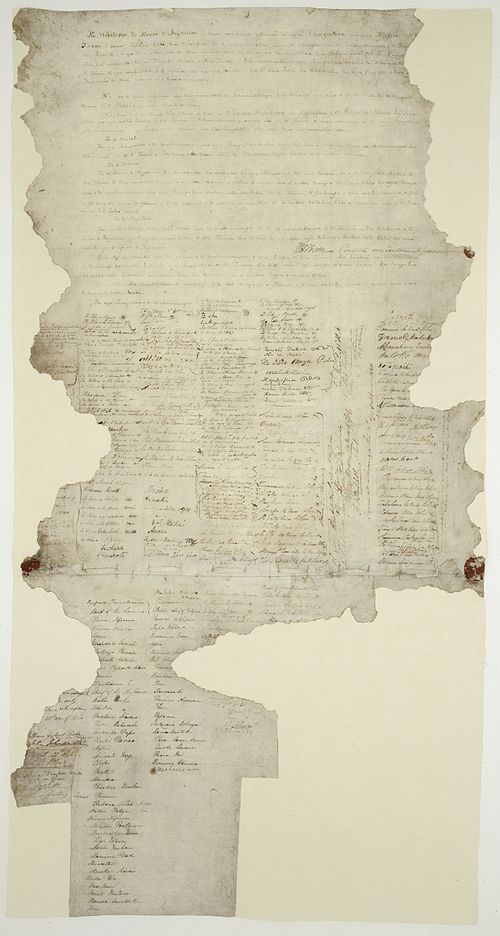
The Waitangi Sheet of the Treaty of Waitangi

Manuscript copy of the Treaty of Waitangi (in Māori) in the hand of Henry Tacy Kemp

Rev Henry Williams, who translated the treaty into Māori with the help of his son Edward Marsh Williams.

A later reconstruction in a painting by Marcus King, depicting Tāmati Wāka Nene in the act of signing. Hobson is incorrectly shown in full uniform (he was actually wearing civilian clothing).