Heliosphere
Videos
The heliosphere is the magnetosphere, astrosphere, and outermost atmospheric layer of the Sun. It takes the shape of a vast, tailed bubble-like region of space. In plasma physics terms, it is the cavi

The Sun photographed at a wavelength of 19.3 nanometers (ultraviolet)

Illustration of the heliosphere as released on 28 June 2013 which incorporates results from the Voyager spacecraft. The heliosheath is between the termination shock and the heliopause.

The bubble-like heliosphere moving through the interstellar medium.

Energetic neutral atom (ENA) detection is more concentrated in one direction.
Interstellar medium
Videos
The interstellar medium is the matter and radiation that exists in the space between the star systems in a galaxy. This matter includes gas in ionic, atomic, and molecular form, as well as dust and co
Heliosphere
…Top: Diagram of the heliosphere as it travels through the interstellar medium: Heliosheath: the outer region of the heliosphere; the solar wind is compressed and turbulent Heliopause: the boundary between the solar wind and…
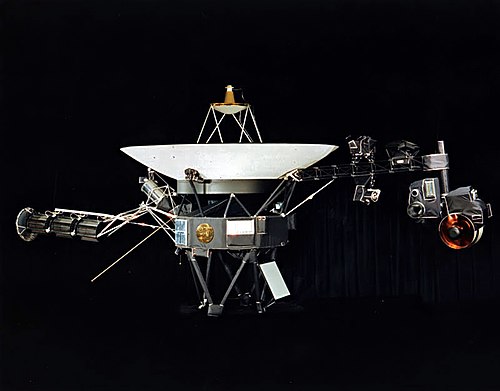
Voyager 1 is the first human made object to reach the interstellar medium.

Three-dimensional structure in Pillars of Creation.

Interstellar medium and astrosphere meeting

This light-year-long knot of interstellar gas and dust resembles a caterpillar.