Hen Wlad Fy Nhadau
Videos
"Hen Wlad Fy Nhadau" is the de facto national anthem of Wales. The title, taken from the first words of the song, means "The Old Land of My Fathers" in Welsh, usually rendered in English as simply "La

The earliest version of a musical notation of Hen Wlad Fy Nhadau written in the hand of the composer James James in 1856

The composers of Hen Wlad Fy Nhadau, Evan James and James James depicted in a memorial at Ynysangharad War Memorial Park, Pontypridd, Wales

A printed version of Gwlad Newydd y Cymry, an adaption of Hen Wlad Fy Nhadau for Y Wladfa, the Welsh area of settlement in Patagonia.

A collection of Breton national songs including "Bro Gozh ma Zadoù" the Breton version of Hen Wlad Fy Nhadau
God Save the King
Videos
"God Save the King" is the national anthem of the United Kingdom. It is one of the two national anthems of New Zealand and the royal anthem of the Isle of Man, Australia, Canada and some other Commonw
Hen Wlad Fy Nhadau
…Nhadau" as a de facto Welsh national anthem since 1905, when it was first sung by fans at rugby games, although the official anthem at the time was "God Save the King". "Hen Wlad Fy Nhadau" slowly established itself as the more popular anthem over the next four decades and was sung along with "God Bless the Prince…

The phrase "God Save the King" in use as a rallying cry to the support of the monarch and the UK's forces during the First World War

Royal Marines and bluejackets aboard HMS Royal Oak being served their rum rations from a rum tub inscribed with "God save the King" (1916)

Stratford-upon-Avon Town Hall (built 1767), bearing the painted slogan, "God Save the King"
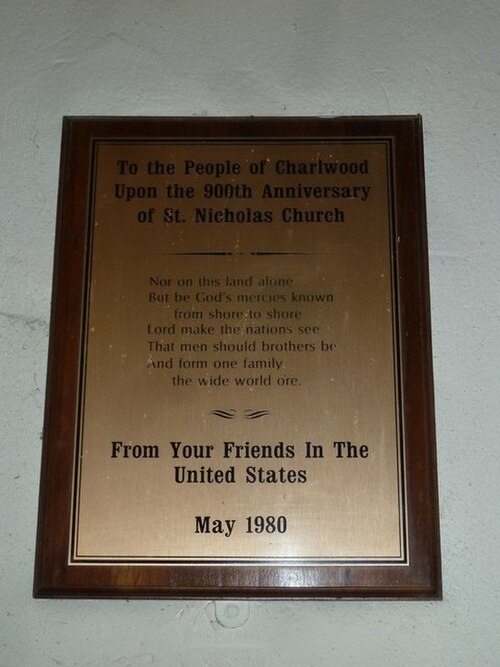
The fourth Hickson verse (with "o'er" misspelled as "o're") on a British-American friendship plaque in St Nicholas' Church, Charlwood, Surrey