High Commissioner to the Philippines
Videos
Photos
The high commissioner to the Philippines was the personal representative of the president of the United States to the Commonwealth of the Philippines during the period 1935–1946. The office was created by the Tydings–McDuffie Act of 1934, which provided for a period of transition from direct American rule to the complete independence of the islands on July 4, 1946. It replaced the office of governor-general of the Philippines, who had direct executive authority. Under the commonwealth, executive power was held by an elected Filipino president. The executive power of the high commissioner was largely ceremonial, and its office is similar to that of an ambassador.

High Commissioner to the Philippines Paul V. McNutt (left) makes a point to Secretary of War Harry H. Woodring during an official visit to Washington in 1938.

Aerial view of the American High Commissioner's Residence, under construction, 1939

The American Residence in Baguio
Commonwealth of the Philippines
Videos
Photos
The Commonwealth of the Philippines was an unincorporated territory and commonwealth of the United States that existed from 1935 to 1946. It was established following the Tydings–McDuffie Act to replace the Insular Government of the Philippine Islands and was designed as a transitional administration in preparation for full Philippine independence. Its foreign affairs remained managed by the United States.
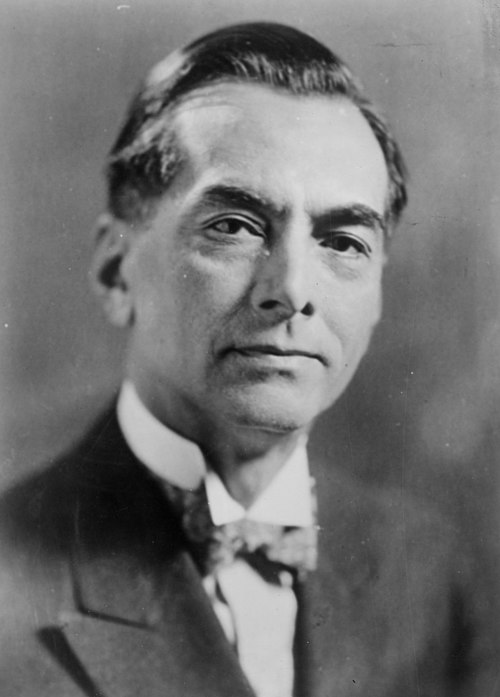
President Manuel Luis Quezon of the Philippines

March 23, 1935: Constitutional Convention. Seated, left to right: George H. Dern, President Franklin D. Roosevelt, and Manuel L. Quezon

Manuel L. Quezon visiting Franklin D. Roosevelt in Washington, D.C., while in exile

General MacArthur and President Osmeña returning to the Philippines