History of Spain (1808–1874)
Videos
Spain in the 19th century was a country in turmoil. Under Napoleonic Spain from 1808 to 1814, the massively destructive "Peninsular War" ensued. Following the Spanish Constitution of 1812, Spain was d
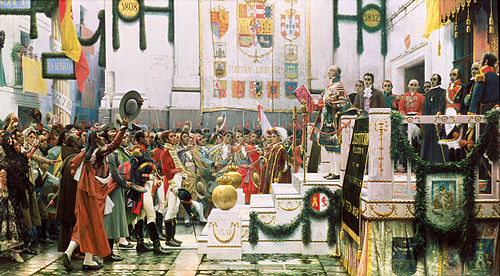
The first Spanish Constitution was established by the Cortes of Cádiz

King Ferdinand VII (r. 1808, 1814–1833)

The cortes of the Trienio Liberal (1820–1823), a period of liberal rule in Spain

The execution of Torrijos, by Antonio Gisbert Pérez. Ferdinand VII, after his restoration as absolute monarch in 1823, took repressive measures against the liberal forces in his country.
First Spanish Republic
Videos
The Spanish Republic, historiographically referred to as the First Spanish Republic, was the political regime that existed in Spain from 11 February 1873 to 29 December 1874.
History of Spain (1808–1874)
…of the Kingdom of Spain. The brief spell of Amadeo of Savoy as constitutional monarch was followed after his abdication by the proclamation of the First Spanish Republic, which was replaced after a 1874 coup by the reign of Alfonso XII, bringing the Bourbon dynasty back to power. The reign of Charles IV was characterized…

Allegory of the Spanish Republic, published in a satirical and liberal magazine

Engraving of the proclamation of the republic by Josep Lluís Pellicer, 1873.