History of heraldry
Videos
Heraldry is the system of visual identification of rank and pedigree which developed in the European High Middle Ages. It was closely associated with the courtly culture of chivalry, Latin Christianit

Depiction of a late medieval knightly tournament from King René's Tournament Book (1460s). The two teams stand ready, each side has 24 knights, all with heraldic surcoats and caparisons, and each accompanied by a banner-bearer with a heraldic flag. There is a central spectators' box for the four judges, where the heraldic shields of the competitors are displayed, the two teams being led by the dukes of Brittany and Bourbon, respectively, and one spectator box on each side for the ladies; inscribed over the boxes is

Depiction of Carolingian-era round shields (Stuttgart Psalter, 9th century). The spiral patterns represent iron bracing reinforcing the shield.

Proto-heraldic shield decorations shown in the Bayeux Tapestry (c. 1077).

Drawing of the equestrian seal of Theobald III, Count of Blois, dated 1138. Traces of an ornamental cross design are visible on the shield.
Heraldry
Videos
Heraldry is a discipline relating to the design, display, study and transmission of armorial bearings. A full heraldic achievement may include a coat of arms on a shield, helmet and crest, together wi
History of heraldry
…Heraldry is the system of visual identification of rank and pedigree which developed in the European High Middle Ages. It was closely associated with the courtly…

The German Hyghalmen Roll was made in the late 15th century and illustrates the German practice of repeating themes from the arms in the crest (Roll of arms).
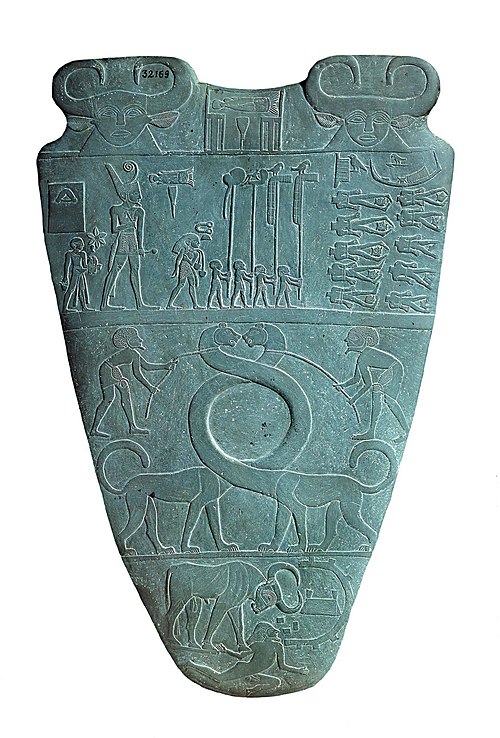
Reverse of the Narmer Palette, circa 3100 BC. The top row depicts four men carrying standards. Directly above them is a serekh containing the name of the king, Narmer.

Fresco depicting a shield of a type common in Mycenaean Greece.
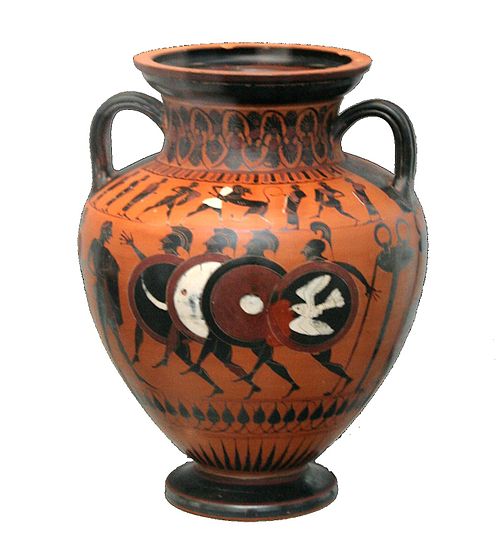
Vase with Greek soldiers in armour, ca. 550 BC.