Lutes are stringed musical instruments that include a body and "a neck which serves both as a handle and as a means of stretching the strings beyond the body".

Ancient Egyptian tomb painting depicting players with long-necked, fretted lutes, 18th Dynasty (c. 1350 BC).
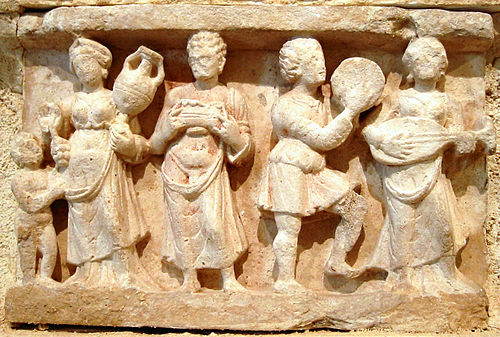
Hellenistic banquet scene from the 1st century AD, Hadda, Gandhara. Lute player with short-necked lute, far right.

Bow harp or harp lute, West Africa

Figure on wall whose bow(?) has been thought of as possibly musical.
Lyre
Videos
The lyre is a stringed musical instrument that is classified by Hornbostel–Sachs as a member of the lute family of instruments. In organology, a lyre is considered a yoke lute, since it is a lute in w
History of lute-family instruments
…Egyptian instrument". While examples exist across 1100 years, the pandura was rarely covered in Greek and Roman art, compared to the cithara, harp and lyre. One possible reason had to do with cultural values. In the Mesopotamia and in Egypt, the lute had been associated with dancing girls and with…

Greek vase with muse playing the phorminx, a type of lyre
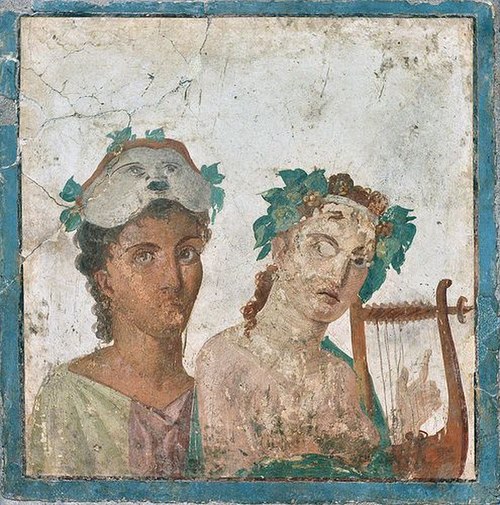
A Roman fresco from Pompeii, 1st century AD, depicting a man in a theatre mask and a woman wearing a garland while playing a lyre

The Minoan sarcophagus of Hagia Triada, 14th century BCE, depicting the earliest lyre with seven strings, held by a man with long robe, third from the left.

A lyre from Ancient Egypt, found in Thebes