Hot-bulb engine
Videos
The hot-bulb engine, also known as a semi-diesel, is a type of internal combustion engine in which fuel ignites by coming in contact with a red-hot metal surface inside a bulb, followed by the introduction of air (oxygen) compressed into the hot-bulb chamber by the rising piston. There is some ignition when the fuel is introduced, but it quickly uses up the available oxygen in the bulb. Vigorous ignition takes place only when sufficient oxygen is supplied to the hot-bulb chamber on the compression stroke of the engine.

Hornsby-Akroyd oil engine (1905): Four-stroke, 14 HP running at the Great Dorset Steam Fair in 2008

The type of blow torch used to start the hot-bulb engine

Blow-lamp being used to heat the hot bulb of a Lanz Bulldog tractor

1939 Lanz Bulldog, a tractor built around a hot bulb engine.
Diesel engine
Videos
The diesel engine, named after Rudolf Diesel, is an internal combustion engine in which ignition of the fuel is caused by the elevated temperature of the air in the cylinder due to mechanical compression; thus, the diesel engine is called a compression-ignition engine. This contrasts with engines using spark plug-ignition of the air-fuel mixture, such as a petrol engine or a gas engine.


Rudolf Diesel's 1893 patent on a rational heat motor
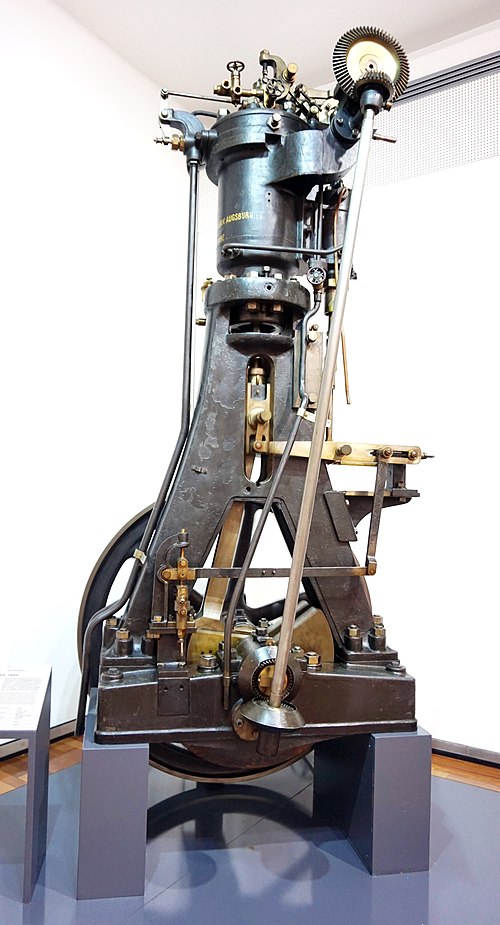
Diesel's second prototype. It is a modification of the first experimental engine. On 17 February 1894, this engine ran under its own power for the first time. Effective efficiency 16.6% Fuel consumption 519 g·kW−1·h−1
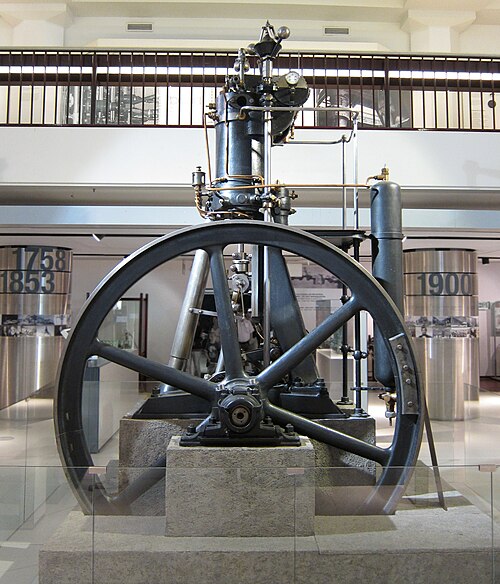
First fully functional diesel engine, designed by Imanuel Lauster, built from scratch, and finished by October 1896. Rated power 13.1 kW Effective efficiency 26.2% Fuel consumption 324 g·kW−1·h−1.