House of Wittelsbach
Videos
The House of Wittelsbach is a former Bavarian dynasty, with branches that have ruled over territories including the Electorate of Bavaria, the Electoral Palatinate, the Electorate of Cologne, Holland,
The Wittelsbach dominions within the Holy Roman Empire (Bavaria, the Netherlands and Palatinate) 1373 are shown as Wittelsbach, among the houses of Luxembourg which acquired Brandenburg that year and Habsburg which had acquired Tyrol in 1369


Heidelberg Castle, the seat of the Electors of Palatinate until destroyed by the French in March 1689

Nymphenburg Palace

The Kingdom of Greece in 1861
Empress Elisabeth of Austria
Videos
Elisabeth, nicknamed Sisi, was Empress of Austria and Queen of Hungary from her marriage to Franz Joseph I on 24 April 1854 until her assassination in 1898.
House of Wittelsbach
…Princess Sophie of Bavaria (1805–1872), Archduchess of Austria Elisabeth in Bavaria (1837–1898) ("Sisi"), Empress of Austria Ludwig II of Bavaria (1864–1886…
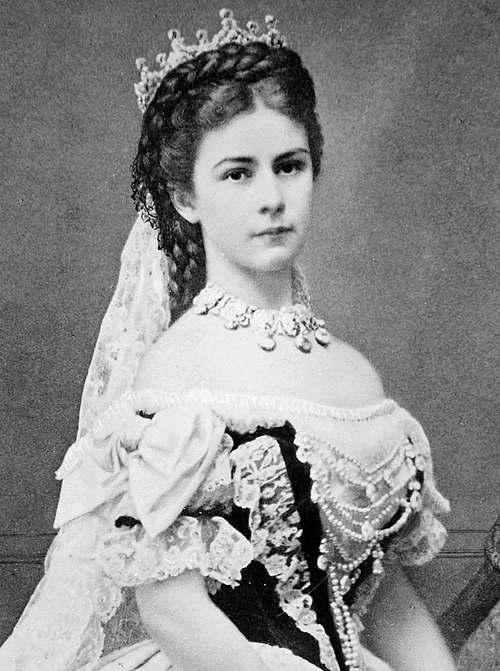
Formal portrait, 1867

Equestrian portrait of Elisabeth at Possenhofen Castle, age 15 (1853)
![The young Elisabeth shortly after becoming Austrian Empress, by Amanda Bergstedt [sv] (1855)](https://upload.wikimedia.org/wikipedia/commons/thumb/7/7a/Amanda_Bergstedt_001.jpg/500px-Amanda_Bergstedt_001.jpg)
The young Elisabeth shortly after becoming Austrian Empress, by Amanda Bergstedt [sv] (1855)
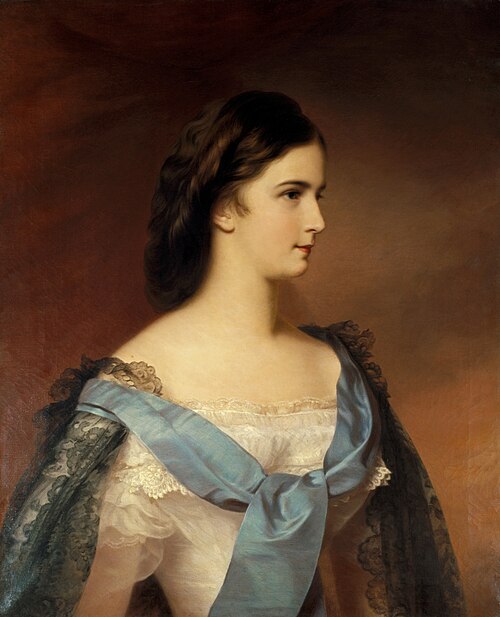
Portrait of Empress Elisabeth, 1857 aged 19