Hypertext
Videos
Hypertext is text displayed on a computer display or other electronic devices with references to other text that the reader can immediately access. Hypertext documents are interconnected by hyperlinks

Engineer Vannevar Bush wrote "As We May Think" in July 1945 in which he described the Memex, a theoretical proto-hypertext device which in turn helped inspire the subsequent invention of hypertext.

Douglas Engelbart in 2009, at the 40th anniversary celebrations of "The Mother of All Demos" in San Francisco, a 90-minute 1968 presentation of the NLS computer system which was a combination of hardware and software that demonstrated many hypertext ideas
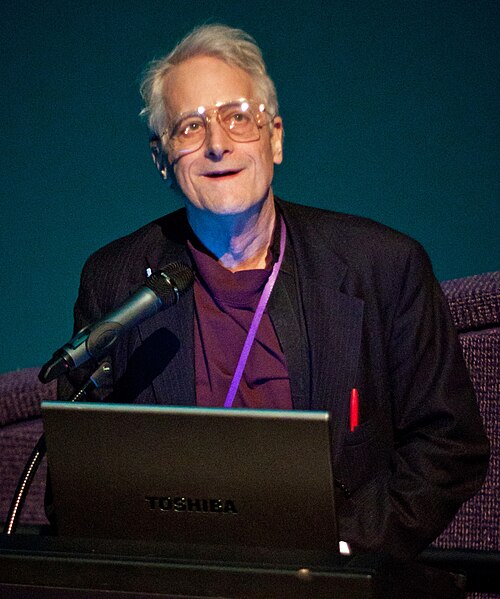
Ted Nelson gives a presentation on Project Xanadu, a theoretical hypertext model conceived in the 1960s whose first and incomplete implementation was first published in 1998.

Hypertext Editing System (HES) IBM 2250 Display console – Brown University 1969
Hyperlink
Videos
In computing, a hyperlink, or simply a link, is a digital reference providing direct access to data by a user's clicking or tapping. A hyperlink points to a whole document or to a specific element wit
Hypertext
…Hypertext is text displayed on a computer display or other electronic devices with references (hyperlinks) to other text that the reader can immediately access. Hypertext documents are interconnected by hyperlinks, which are typically activated by a mouse…

Douglas Engelbart and his team at SRI, 1969