Impact event
Videos
An impact event is a collision between astronomical objects causing measurable effects. Impact events have been found to regularly occur in planetary systems, though the most frequent involve asteroid

Damage to trees caused by the Tunguska event. The object, just 50–80 metres (160–260 ft) across, exploded 6–10 km (3.7–6.2 mi) above the surface, shattering windows hundreds of kilometres away.

Frequency of small asteroids roughly 1 to 20 meters in diameter impacting Earth's atmosphere.
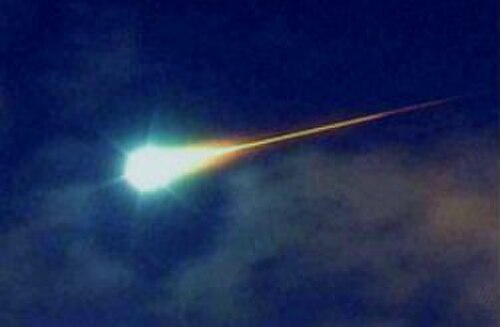
A bolide undergoing atmospheric entry

Eugene Merle Shoemaker was first to prove that meteorite impacts have affected the Earth.
Late Heavy Bombardment
Videos
The Late Heavy Bombardment, or lunar cataclysm, is a hypothesized astronomical event thought to have occurred approximately 4.1 to 3.8 billion years ago, at a time corresponding to the Neohadean and E
Artist's impression of the Moon during the Late Heavy Bombardment (above) and today (below)


Full Moon 2010

Pingualuit aerial 2007