Impulse (physics)
Videos
In classical mechanics, impulse is the change in momentum of an object. It is most often used to describe forces which act over short time periods, specifically in the case of impacts and collisions,

A large force applied for a very short duration, such as a golf shot, is often described as the club giving the ball an impulse.
Classical mechanics
Videos
In physics, classical mechanics is a theory that describes the effect of forces on the motion of macroscopic objects and bulk matter, without considering quantum effects, and often without incorporati
Impulse (physics)
…In classical mechanics, impulse (symbolized by J or Imp) is the change in momentum of an object. It is most often used to describe forces which act over short time periods…

Sir Isaac Newton (1643–1727), an influential figure in the history of physics and whose three laws of motion form the basis of classical mechanics

Lagrange's contribution was realising Newton's ideas in the language of modern mathematics, now called Lagrangian mechanics.
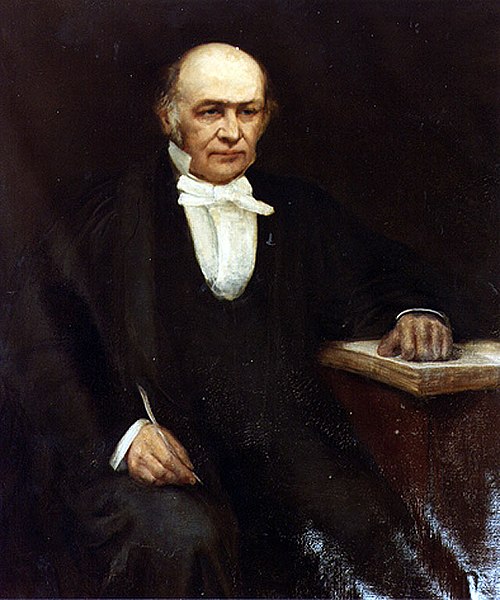
Hamilton developed an alternative to Lagrangian mechanics now called Hamiltonian mechanics.