Indra
Videos
Indra is the Vedic god of weather, considered the king of the devas and the realm of Svarga in Hinduism. He is associated with the sky, lightning, weather, thunder, storms, rains, river flows, and war
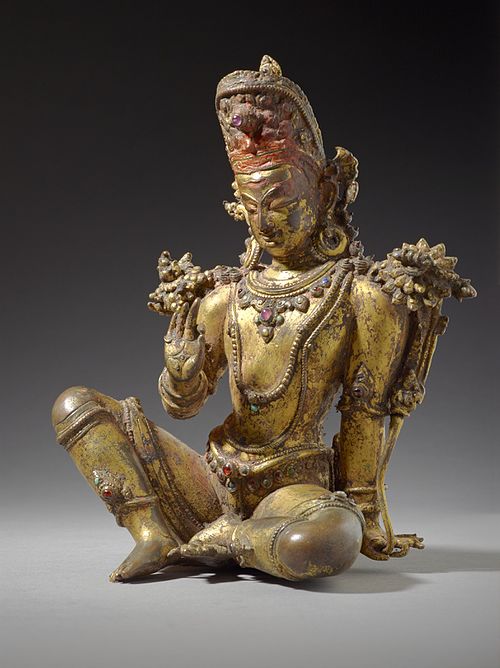
A gilt-copper sculpture of Indra, c. 16th-century

Indra on his elephant, guarding the entrance of the 1st century BCE Buddhist Cave 19 at Bhaja Caves (Maharashtra).

Banteay Srei temple's pediment carvings depict Indra mounted on Airavata, Cambodia, c. 10th century.

Indra is typically featured as a guardian deity on the east side of a Hindu temple.
Indrani
Videos
Indrani, also known as Shachi and Paulomi, is the queen of the devas in Hinduism. Described as tantalisingly beautiful, proud and kind, she is the daughter of the asura Puloman and the consort of the
Indra
…but the king of superhumans residing in Svarga-Loka, and very much a part of Jain rebirth cosmology. He is also the one who appears with his consort Indrani to celebrate the auspicious moments in the life of a Jain Tirthankara, an iconography that suggests the king and queen of superhumans residing in Svarga…

c. 1500–1600 Indrani from Nepal, depicted as consort of Indra

Indra, Indrani, and Airavata in a 6th-century cave temple in Badami, Karnataka

Shachi (Indrani) has been lusted after by various men. In this painting by Raja Ravi Varma, Shachi (far-left) is presented to Ravana after his son Meghnada conquered heaven.

In a folio from the Bhagavata Purana, Krishna uproots the Parijata Tree while Indra and Shachi (Indrani) apologise.