Ionians
Videos
The Ionians were one of the four major tribes that the Greeks considered themselves to be divided into during the ancient period; the other three being the Dorians, Aeolians, and Achaeans. The Ionian
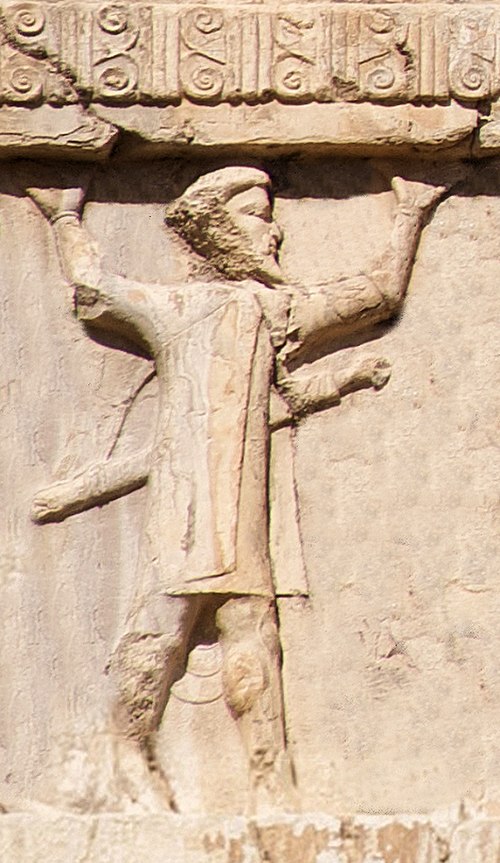
Ionian soldier (Old Persian cuneiform 𐎹𐎢𐎴, Yaunā) of the Achaemenid army, circa 480 BCE. Relief on the tomb of Xerxes I.

The Seleucid king Antiochos ("Aṃtiyako Yona Rājā" ("The Yona king Antiochos")) is named as a recipient of Ashoka's medical treatments, together with his Hellenistic neighbours, in the Edicts of Ashoka (circa 250 BCE).

"Aṃtiyako Yona Rājā" ("The Greek king Antiochos"), mentioned in Major Rock Edict No.2, here at Girnar. Brahmi script.

Portrait of Herodotus, Roman copy of a 4th century Greek original
Dorians
Videos
The Dorians were one of the four major ethnic groups into which the Hellenes of Classical Greece divided themselves. They are almost always referred to as just "the Dorians", as they are called in the
Ionians
…Íōn) were one of the four major tribes that the Greeks considered themselves to be divided into during the ancient period; the other three being the Dorians, Aeolians, and Achaeans. The Ionian dialect was one of the three major linguistic divisions of the Hellenic world, together with the Dorian and Aeolian…

Dorian site of Lato on the island of Crete

Uplands of Greece - the Pindus Mountains

Doric order of architecture with polychromy

Fifth century BC hoplite, or "heavy-armed soldier", possibly the Spartan king Leonidas, a Dorian, who died holding the pass at the Battle of Thermopylae.