Janapada
Videos
The Janapadas were the realms, aristocratic republics and kingdoms of the Vedic period in the Indian subcontinent. The Vedic period reaches from the late Bronze Age into the Iron Age: from about 1500
MET 2001 433 53 O


Ax Blade

Locations of kingdoms and republics mentioned in the Indian epics or Bharata Khanda.

Modern replica of utensils and falcon shaped altar used for Agnicayana, an elaborate srauta ritual originating from the Kuru kingdom, around 1000 BCE.
Mahajanapadas
Videos
The Mahājanapadas were sixteen kingdoms and aristocratic republics that existed in ancient India from the sixth to fourth centuries BCE, during the second urbanisation period.
Janapada
…subcontinent. The Vedic period reaches from the late Bronze Age into the Iron Age: from about 1500 BCE to the 6th century BCE. With the rise of sixteen Mahajanapadas ("great janapadas"), most of the states were annexed by more powerful neighbours, although some remained independent. Janapadas were the kingdoms and…

Pottery of the Northern Black Polished Ware culture (c. 500–200 BCE)

Silver coin of Avanti mahajanapada (4th century BCE)
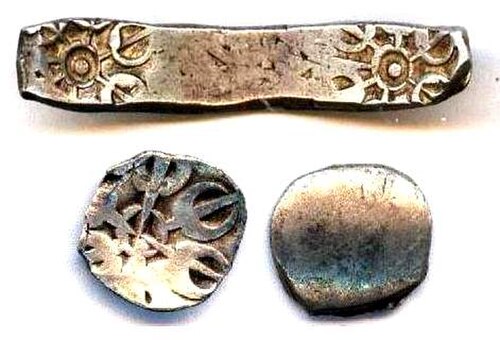
Coin of Early Gandhara Janapada: AR Shatamana and one-eighth Shatamana (round), Taxila-Gandhara region, c. 600–300 BCE

Coin of Takshashila portraying a tree flanked by a hill surmounted by a crescent and a Nandipada above a swastika.