Japanese National Railways
Videos
The Japanese National Railways, abbreviated JNR or Kokutetsu, was the government-owned entity that operated Japan's national railway network from 1949 to 1987.
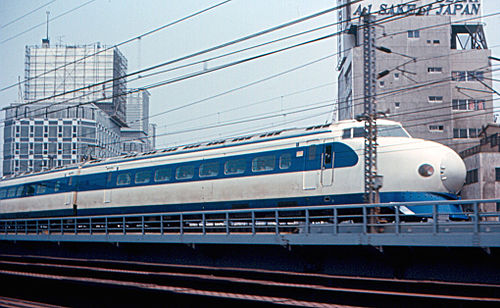
0 series set Tokaido Shinkansen in Tokyo, May 1967

JNR Bus

Ukō Ferry (c. 1986)

JNR plate seen at the entrance of its headquarters in Tokyo, photo taken c. 1985
The division and privatization of Japanese National Railways was a landmark administrative reform implemented by the Zenkō Suzuki and Nakasone Cabinets. Under this initiative, the chronically unprofit
Japanese National Railways
…breaking up JNR and in August 1982 launched the JNR Reform Commission to officially begin the process. By an act of the Diet of Japan, on April 1, 1987, JNR was privatized and divided into seven railway companies, six passenger and one freight, collectively called the Japan Railways Group or JR Group. Long-term liabilities of JNR…

Unprofitable local lines, such as the Shiranuka Line, were phased out or transferred to ensure the long-term viability of the core network.
![The 1973 Ageo Incident [ja], where passengers rioted after prolonged delays, highlighted the public's frustration with JNR's union-driven disruptions.](https://upload.wikimedia.org/wikipedia/commons/thumb/6/67/JNR_Office_destroyed_by_Ageo_riot.jpg/500px-JNR_Office_destroyed_by_Ageo_riot.jpg)
The 1973 Ageo Incident [ja], where passengers rioted after prolonged delays, highlighted the public's frustration with JNR's union-driven disruptions.

The 2005 Amagasaki derailment led to safety-first reforms and modernized operational training systems across the JR Group.

Militant unionism, once a major disruptor of public transit, was reduced to a marginal presence following privatization.