Jean-Luc Perrot
Videos
Jean-Luc Perrot is a French organist, carillonneur, composer and musicologist.

Jean-Luc Perrot at the Souvigny pipe organ

Historical organ built by François Henri Clicquot (1783), Souvigny

Orgue Callinet (1837), Notre-Dame church, Saint-Étienne

Mechanical chime of Notre-Dame church (detail of small bells), Saint-Étienne
Harpsichord
Videos
A harpsichord is a keyboard instrument that makes its sound by plucking a set of strings. In a harpsichord, depressing a key raises its back end within the instrument, which in turn lifts one or more
This harpsichord is the work of two celebrated makers: originally constructed by Andreas Ruckers in Antwerp (1646), it was later remodeled and expanded by Pascal Taskin in Paris (1780).

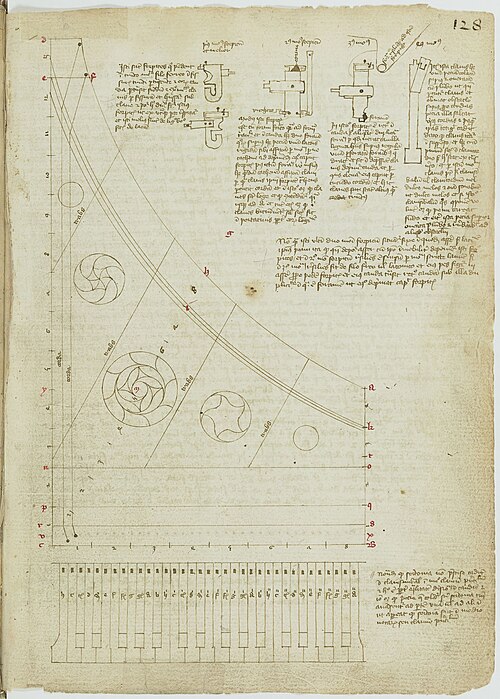
An early diagram of a vertical harpsichord (clavicytherium) by Arnault de Zwolle, c. 1430

Harpsichord by Christian Zell, at Museu de la Música de Barcelona. From upper left to lower right: a bridge (supporting the far ends of the strings), the jack rail with the action (jacks) underneath, two nuts (supporting the closer ends of the strings), interleaved with two rows of tuning pins, and finally the keyboard. As with all harpsichords, the action itself is mostly hidden by the jack rail when the instrument is being played; only by removing the jack rail (or indeed, by extracting a jack) can the details of the action be observed.

Sound board of a harpsichord with Chladni patterns