John I Tzimiskes
Videos
John I Tzimiskes was the senior Byzantine emperor from 969 to 976. An intuitive and successful general who married into the influential Skleros family, he strengthened and expanded the Byzantine Empir
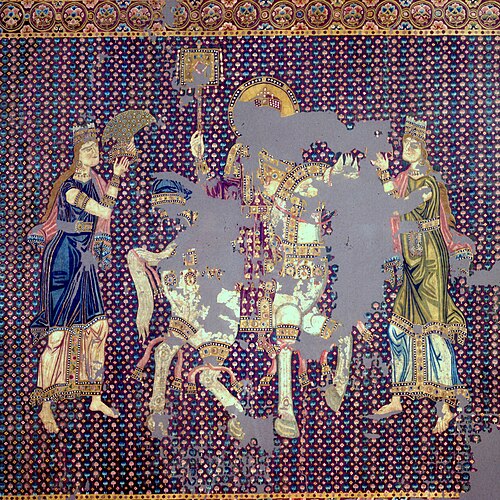
Detail of the Gunthertuch, a Byzantine silk tapestry depicting John Tzimiskes being greeted by the Blues and Greens at a triumph

Tentative reproduction of the lost portrait of John I. He is depicted beardless, although literary sources describe him as having a reddish/blonde facial hair.
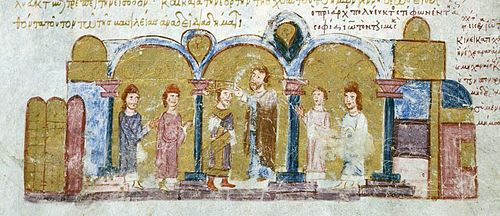
The coronation of John Tzimiskes, from the Madrid Skylitzes

The Byzantine army under John I lays siege to the Bulgarian capital at Preslav.
The Syrian campaigns of John Tzimiskes were a series of campaigns undertaken by the Byzantine emperor John I Tzimiskes against the Fatimid Caliphate in the Levant and against the Abbasid Caliphate in
John I Tzimiskes
…Muslim neighbours in the east. In 972, Tzimiskes turned against the Abbasid Empire and its vassals, beginning with an invasion of upper Mesopotamia. A second campaign, in 975, was aimed at Syria, where his forces took Emesa, Heliopolis, Damascus, Tiberias, Nazareth, Caesarea, Sidon, Beirut, Byblos, and Tripoli, but…

John Tzimiskes receiving ambassadors from the Rus, miniature from the Madrid Skylitzes.