Josef Albers
Videos
Josef Albers was a German-born American artist and educator who is considered one of the most influential 20th-century art teachers in the United States. Born in 1888 in Bottrop, Westphalia, Germany, into a Roman Catholic family with a background in craftsmanship, Albers received practical training in diverse skills like engraving glass, plumbing, and wiring during his childhood. He later worked as a schoolteacher from 1908 to 1913 and received his first public commission in 1918 and moved to Munich in 1919.


Armchair (late 1920s)

Josef Albers, Proto-Form (B), oil on fiberboard, 1938, Hirshhorn Museum and Sculpture Garden

Albers Wrestling (1977) in Sydney
Abstract art
Videos
Abstract art uses visual language of shape, form, color and line to create a composition which may exist with a degree of independence from visual references in the world.


James McNeill Whistler, Nocturne in Black and Gold: The Falling Rocket (1874), Detroit Institute of Arts

Francis Picabia, c. 1909, Caoutchouc, Centre Pompidou, Musée national d'art moderne, Paris
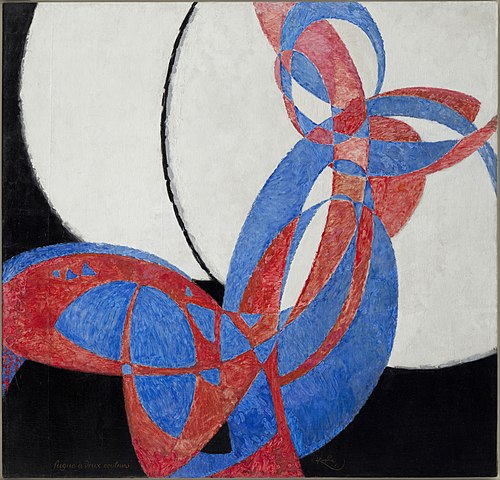
František Kupka, Amorpha, Fugue en deux couleurs (Fugue in Two Colors), 1912, oil on canvas, 210 × 200 cm, Narodni Galerie, Prague. Published in Au Salon d'Automne "Les Indépendants" 1912, Exhibited at the 1912 Salon d'Automne, Paris.