July Crisis
Videos
The July Crisis was a series of interrelated diplomatic and military escalations among the major powers of Europe in mid-1914, which led to the outbreak of World War I. It began on 28 June 1914 when t
Illustration of the assassination in the Italian newspaper La Domenica del Corriere, 12 July 1914


The accused in court. Front row, from left: 1. Trifko Grabež, 2. Nedeljko Čabrinović, 3. Gavrilo Princip, 4. Danilo Ilić, 5. Miško Jovanović.

Austro-Hungarian postcard made after the assassination of Archduke Ferdinand depicting an Austrian fist crushing an ape-like caricature of a Serbian holding a bomb and dropping a knife, and stating "Serbia must die!" (Sterben purposefully misspelled as sterbien to make it rhyme with Serbien.)
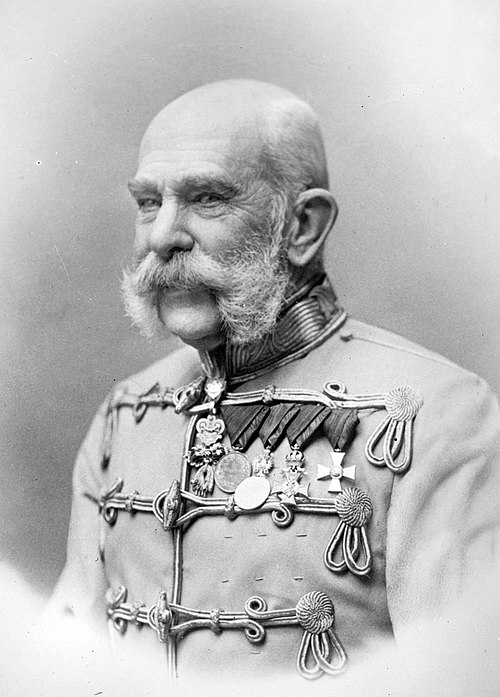
Emperor Franz Joseph was 84 years old in 1914. Though disturbed by the murder of his heir and nephew, Franz Joseph largely left decision-making during the July Crisis to foreign minister Leopold Berchtold, army chief of staff Franz Conrad von Hötzendorf, and the other ministers.
Gavrilo Princip
Videos
Gavrilo Princip was a Bosnian Serb student who assassinated Archduke Franz Ferdinand, heir presumptive to the throne of Austria-Hungary, and his wife Sophie, Duchess of Hohenberg, in Sarajevo on 28 Ju
July Crisis
…among the major powers of Europe in mid-1914, which led to the outbreak of World War I. It began on 28 June 1914 when the Bosnian Serb nationalist Gavrilo Princip assassinated Archduke Franz Ferdinand, heir presumptive to the Austro-Hungarian throne, and his wife Sophie, Duchess of Hohenberg. A complex web of…

Princip in his prison cell on 4 July 1914

Princip family home in Obljaj

Gavrilo Princip's parents, Marija and Petar Princip c. 1927

(left to right) Trifko Grabež, Milan Ciganović, and Gavrilo Princip in Kalemegdan Park, Belgrade, c. May 1914.