Kadam (Tibetan Buddhism)
Videos
The Kadam school of Tibetan Buddhism, or Kadampa was an 11th century Buddhist tradition founded by the great Bengali master Atiśa and his students including Dromtön, a Tibetan Buddhist lay master. The
Tibetan Portrait of Atiśa


An old Stupa on Reting Monastery grounds

An illustration of Narthang monastery

Chekawa Yeshe Dorje, a prolific author of Training the Mind in Seven Points which focuses on developing compassion and bodhicitta in one's life.
Je Tsongkhapa
Videos
Tsongkhapa was an influential Tibetan Buddhist monk, philosopher, and tantric yogi, whose activities led to the formation of the Gelug school of Tibetan Buddhism.
Kadam (Tibetan Buddhism)
…students including Dromtön (1005–1064), a Tibetan Buddhist lay master. The Kadampa stressed compassion, pure discipline and study. By the 15th century, Tsongkapa is credited with synthesizing and folding Kadampa lineages into the Gelug school. The most evident teachings of that tradition were the graduated…
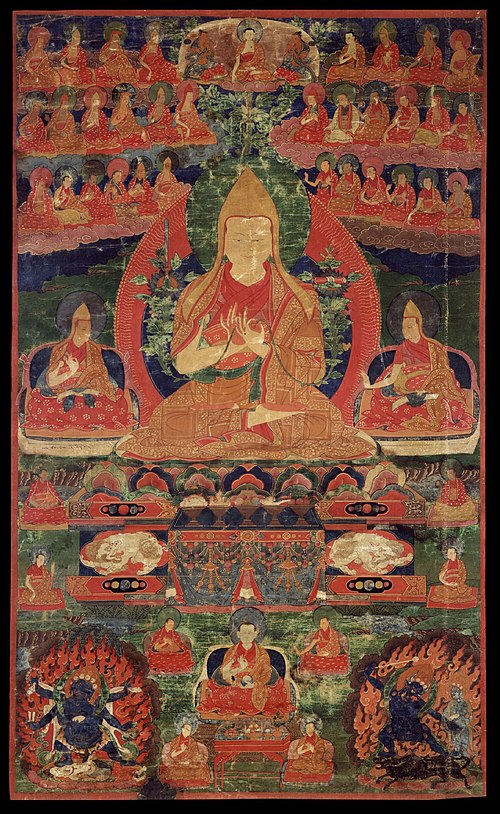
Tsongkhapa, 16th century, Rubin Museum of Art

Painting depicting the life of Tsongkhapa, the largest image on the left showing the dream he had of the great Indian scholars like Buddhapalita

A depiction of Tsongkhapa communing with Mañjuśrī bodhisattva

Ganden Monastery, Tibet