Kadam (Tibetan Buddhism)
Videos
The Kadam school of Tibetan Buddhism, or Kadampa was an 11th century Buddhist tradition founded by the great Bengali master Atiśa and his students including Dromtön, a Tibetan Buddhist lay master. The
Tibetan Portrait of Atiśa


An old Stupa on Reting Monastery grounds

An illustration of Narthang monastery

Chekawa Yeshe Dorje, a prolific author of Training the Mind in Seven Points which focuses on developing compassion and bodhicitta in one's life.
Gelug
Videos
The Gelug is the youngest of the four major schools of Tibetan Buddhism. It was founded by Je Tsongkhapa, a Tibetan philosopher, tantric yogi and lama and further expanded and developed by his discipl
Kadam (Tibetan Buddhism)
…stressed compassion, pure discipline and study. By the 15th century, Tsongkapa is credited with synthesizing and folding Kadampa lineages into the Gelug school. The most evident teachings of that tradition were the graduated teachings on the Mahayana path. These special presentations became known as…
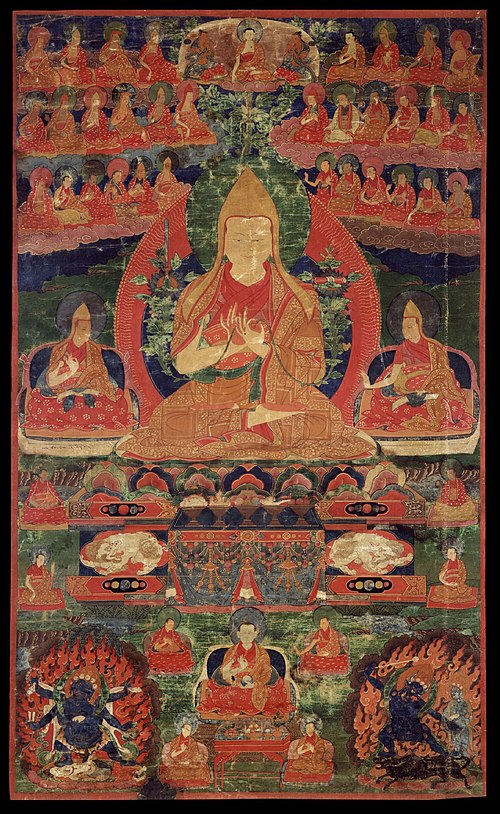
An illustration of Je Tsongkhapa, the founder, and his two principal students (Kédrup and Gyeltsap) on his left and right with other lineage teachers and protectors of the Gelug tradition

The 14th Dalai Lama (center), the most influential figure of the contemporary Gelug tradition, at the 2003 Kalachakra ceremony, Bodhgaya (India)

Khedrup Gelek Pelzang, 1st Panchen Lama (1385–1438 CE), the main leader of the Gelug school after Tsongkhapa's death

Gendun Drup, founder of Tashilhunpo Monastery, and the First Dalai Lama