Kanva dynasty
Videos
The Kanva dynasty or Kanvavamsha was a Brahmin ruling dynasty of Magadha, established after Vasudeva Kanva overthrew the preceding Shunga dynasty and ruled from 73 BCE to 28 BCE.
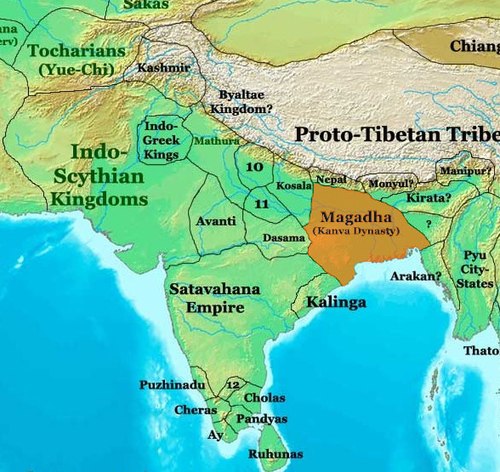
Kanvayana shown with other petty kingdoms of that time, along with the large kingdoms of the Satavahanas and Indo-Scythians.

North Gateway Rear Side Stupa 1 Sanchi Hill 2013 02 21 4480 4481
Shunga Empire
Videos
The Shunga Empire was a ruling entity centred around Magadha and controlled most of the northern Indian subcontinent from around 187 to 75 BCE. The dynasty was established by Pushyamitra, after taking
Kanva dynasty
…The Kanva dynasty or Kanvavamsha was a Brahmin ruling dynasty of Magadha, established after Vasudeva Kanva overthrew the preceding Shunga dynasty and ruled from 73 BCE to 28 BCE. Although the Puranic literature indicates that the Kanvas ruled from the former capital of the Shungas in Pataliputra…

Man on a relief, Bharhut, Shunga period.

Shunga horseman, Bharhut.

Shunga period stupa at Sanchi.

East Gateway and Railings, Red Sandstone, Bharhut Stupa, 2nd century BCE. Indian Museum, Kolkata.