Kapalika
Videos
The Kāpālika tradition was a Tantric, non-Puranic form of Shaivism which originated in medieval India between the 4th and 8th century CE. The word is derived from the Sanskrit term kapāla, meaning "sk
In Vajrayāna Buddhism, the symbol of the skull-topped trident (khaṭvāṅga) is said to be inspired by its association with the Kāpālikas. Pictured here is an ivory khaṭvāṅga, 15th-century Chinese art, Metropolitan Museum of Art, New York City.


Tantric goddess Bhairavi and her consort Shiva depicted as Kāpālika ascetics, sitting in a charnel ground. Painting by Payāg from a 17th-century manuscript (c. 1630–1635), Metropolitan Museum of Art, New York City.

India statue of nataraja
Shaivism
Videos
Shaivism is an umbrella-term for a number of Hindu religious traditions, which worship Shiva as the supreme being. The followers of Shaivism are called Shaivas or Shaivites, numbering about 385 millio
Kapalika
…The Kāpālika (Sanskrit : कापालिक) tradition was a Tantric, non-Puranic form of Shaivism which originated in medieval India between the 4th and 8th century CE. The word is derived from the Sanskrit term kapāla, meaning "skull", and kāpālika…

Shiva (above) is the primary God in Shaivism.
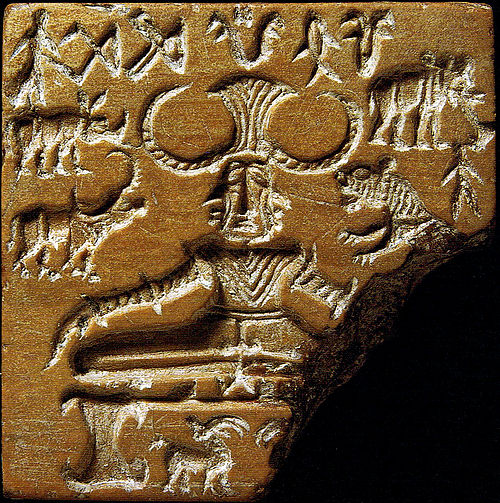
The "Pashupati" seal from the Indus Valley civilisation

Shiva is worshipped as Adiyogi (the first yogi), the originator of yoga and the lord of yogis, in Shaivism and broader Hinduism.

Kushan coin of Vima Kadphises (2nd century CE), with a possible Shiva, holding a trident, in ithyphallic state and next to a bull, his mount, as in Shaivism. The deity was described by the later Kushans in their coinage as "Oesho", a possibly kushan deity.