Kara-Khanid Khanate
Videos
The Kara-Khanid Khanate, also known as the Karakhanids, Qarakhanids, Ilek Khanids or the Afrasiabids, was a Karluk Turkic khanate that ruled Central Asia from the 9th to the early 13th century. The dy
Anikova dish: Nestorian Christian plate with decoration of the Siege of Jericho, probably made by Sogdian artists under Karluk dominion, in Semirechye. Cast silver of the 9th-10th century, copied from an original 8th century plate.


Armoured horsemen on the Anikova dish, Jetisu c. 800.

Tomb of Sultan Satuq Bughra Khan (r. 920–955 CE) the first Muslim Khan of the Kara-Khanids, in Artush, Xinjiang

The Kara-Khanid Ilig Khan (left) facing Mahmud of Ghazni riding an elephant in 1017–1018. Jami al-Tawarikh, 1306-14 (Edinburgh Or Ms 20)
Qara Khitai
Videos
The Qara Khitai or Kara Khitai, also known as the Western Liao or Great Liao, was a dynastic state based in Central Asia ruled by the Yelü clan of the Khitans, who were a Para-Mongolic people from mod
Kara-Khanid Khanate
…split into the Eastern and Western Khanates in the 1040s. In the late 11th century, they came under the suzerainty of the Seljuk Empire followed by the Qara Khitai (Western Liao dynasty) who defeated the Seljuks in the Battle of Qatwan in 1141. The Eastern Khanate ended in 1211, and the Western Khanate was…
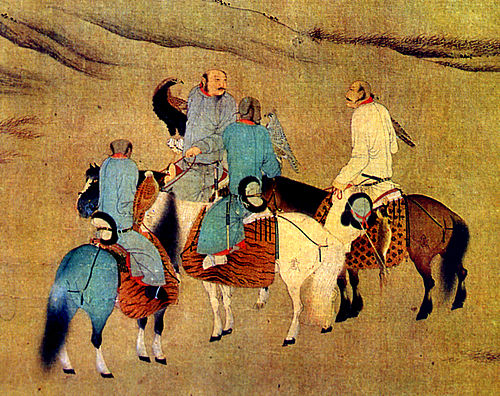
The Khitans in the 10th century, forebears of the Kara-Khitans.

Chinese portrayal of a "Black Khitan" (黑契丹), i.e. Kara-Khitan man, from Sancai Tuhui.

Khitan tomb mural, Chifeng city, Inner Mongolia.

Khitan gold headdress