Kashmir Shaivism
Videos
Kashmir Shaivism is a 19th-century umbrella-term for a body of Sanskrit exegetical literature of non-dual Shaiva-Shakta tantric and monistic religious traditions from Kashmir, "principally the Trika a

c. 8th century CE Shaivite Temple complex at Wangath in the Himalayas of Kashmir

Shiva and Parvati (which is associated with Shakti), Kashmir, 10 or 11th century.

Painting of a priest and worshippers at a Shiva temple in Srinagar, Kashmir, circa 1850–1860

A painting of goddess Kali from Jammu and Kashmir, c. 1660–1670, from a Tantric Devi series attributed to Kripal of Nurpur (active c. 1660 – c. 1690). Philadelphia Museum of Art
Trika
Videos
Trika was a school of Kaula which flourished in Kashmir between ca. 900 and 1300 CE, and is often used synonymously for the whole of Kashmir Shaivism, an exegetical tradition which developed in Kashmi
Kashmir Shaivism
…for a body of Sanskrit exegetical literature of non-dual Shaiva-Shakta tantric and monistic religious traditions from Kashmir, "principally the Trika and the Krama," both subschools of the Kaula-tradition. This exegetical tradition developed in Kashmir after 850 CE, as an adaptation to upper-class…
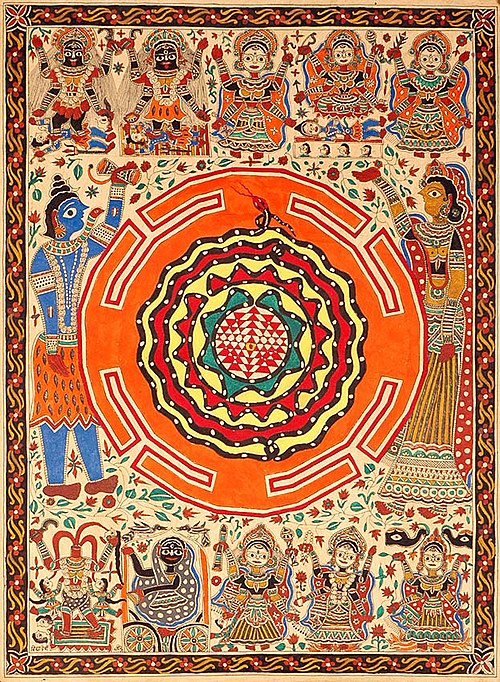
Sri Yantra diagram with the Ten Mahavidyas. The triangles represent Shiva and Shakti, the snake represents Spanda and Kundalini.
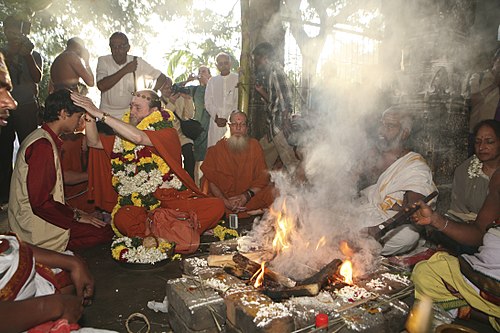
Tantric initiation (dīkṣa) is necessary for undertaking the tantric practices of Trika Saivism.

Schist statue of Shiva Mahadeva, Northern India, Kashmir, 8th century. Cleveland Museum of Art.