Nondualism
Videos
Nondualism, also called nonduality, is a fuzzy concept originating in Indian philosophy and religion, where it is used in various, related contemplative philosophies that aim to negate dualistic think
Adi Shankara, the most prominent exponent of Advaita Vedānta tradition. "I am other than name, form and action. My nature is ever free! I am Self, the supreme unconditioned Brahman. I am pure Awareness, always non-dual." Adi Shankara, Upadesasahasri 11.7


The moon and its light hidden by the clouds is a metaphor for the luminous mind of Buddha-nature, which is always shining but can be hidden or covered over by the afflictions.

The layman Vimalakīrti debates Manjusri, Dunhuang Mogao Caves
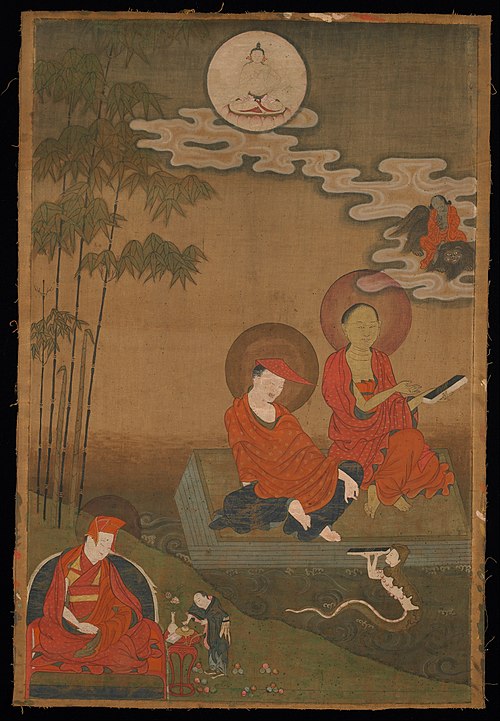
Nagarjuna (right), Aryadeva (middle) and the Tenth Karmapa (left)