The King's Privy Council for Canada, sometimes called His Majesty's Privy Council for Canada or simply the Privy Council (PC), is the full group of personal consultants to the monarch of Canada on state and constitutional affairs. Practically, the tenets of responsible government require the sovereign or his viceroy, the governor general of Canada, to almost always follow only that advice tendered by the Cabinet: a committee within the Privy Council composed usually of elected members of Parliament. Those summoned to the KPC are appointed for life by the governor general on the advice of the prime minister of Canada, meaning that the group is composed predominantly of former Cabinet ministers, with some others having been inducted as an honorary gesture. Those in the council are accorded the use of an honorific style and post-nominal letters, as well as various signifiers of precedence.

The Office of the Prime Minister and Privy Council building is the seat of the Privy Council

Andrew Scheer, then leader of the opposition, being sworn into the Privy Council at Rideau Hall in 2017

Prince Edward (front row, fifth from left), at Rideau Hall, in Ottawa, two days after being appointed to the King's Privy Council for Canada
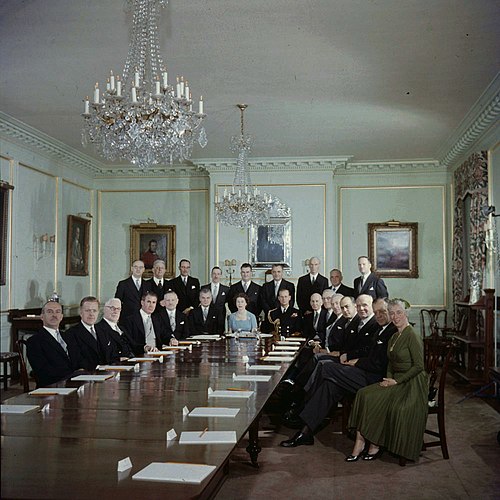
The first meeting of the Privy Council before the reigning sovereign; in the State Dining Room of Rideau Hall. Queen Elizabeth II is seated at centre, with Prince Philip, Duke of Edinburgh, to her left, and Prime Minister John Diefenbaker at her right; 14 October 1957.
Responsible government
Videos
Responsible government is a conception of a system of government that embodies the principle of parliamentary accountability, the foundation of the Westminster system of parliamentary democracy. Governments in Westminster democracies are responsible to parliament rather than to the monarch, or, in a colonial context, to the imperial government, and in a republican context, to the president, either in full or in part. If the parliament is bicameral, then the government is responsible first to the parliament's lower house, which is more representative than the upper house, as it usually has more members and they are always directly elected.

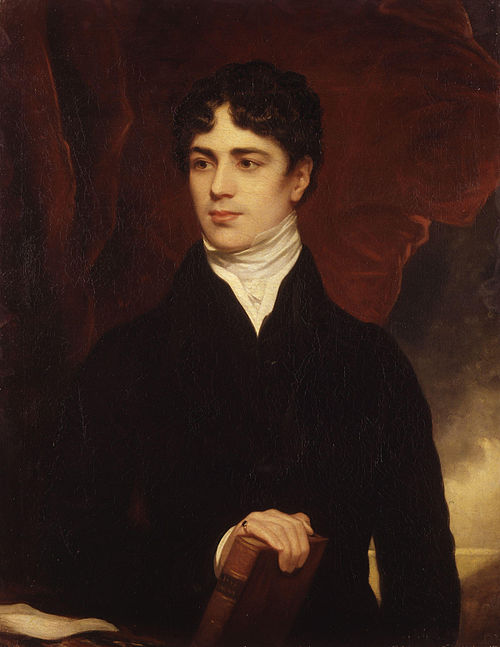
The Earl of Durham, Governor General of British North America, made a report shortly after the 1837–38 rebellions that recommended the implementation of responsible government

A political cartoon from Punch in Canada, in 1849, depicting a "young Canada" being delighted by Lord Elgin pulling the strings of a puppet, representing responsible government

William Charles Wentworth was the leading advocate for responsible government in the Australian colonies and was central in the establishment of the Parliament of New South Wales.