King of the Universe
Videos
King of the Universe, also interpreted as King of Everything, King of the Totality, King of All or King of the World, was a title of great prestige claiming world domination used by powerful monarchs in ancient Mesopotamia. The title is sometimes applied to God in the Abrahamic tradition.


An inscription of the Akkadian king Rimush on the shell of a rock snail of the genus Murex, reading "Rimush, King of Kish". By Rimush's time, "King of Kish" would have meant "King of the Universe". Now housed in the Louvre, Paris.

The Assyrian usage of the title was contested by other kingdoms even during the reigns of the powerful Neo-Assyrian kings, such as Ashurbanipal (pictured strangling and stabbing a lion), for instance by Urartu and Babylon. Relief housed in the British Museum.

Tetradrachm of Antiochus I of the Seleucid Empire, the last known ruler to use the title King of the Universe.
King of the Four Corners
Videos
King of the Four Corners of the World, alternatively translated as King of the Four Quarters of the World, King of the Heaven's Four Corners or King of the Four Corners of the Universe and often shortened to simply King of the Four Corners, was a title of great prestige claimed by powerful monarchs in ancient Mesopotamia. Though the term "four corners of the world" does refer to specific geographical places within and near Mesopotamia itself, these places were thought to represent locations near the actual edges of the world and as such, the title should be interpreted as something equivalent to "King of all the known world", a claim to universal rule over the entire world and everything within it.


Seal of the Neo-Sumerian king Ibbi-Sin in the Metropolitan Museum of Art. The inscription reads "Ibbi-Sin the strong king, king of Ur, King of the four corners of the world".

"Naram-Sin, King of the four regions (of the World)" 𒀭𒈾𒊏𒄠𒀭𒂗𒍪 𒈗 𒆠𒅁𒊏𒁴 𒅈𒁀𒅎 DNa-ra-am DSîn lugal ki-ibratim arbaim Limestone vase inscription, Girsu, circa 2250 BCE. Louvre Museum AO 74.
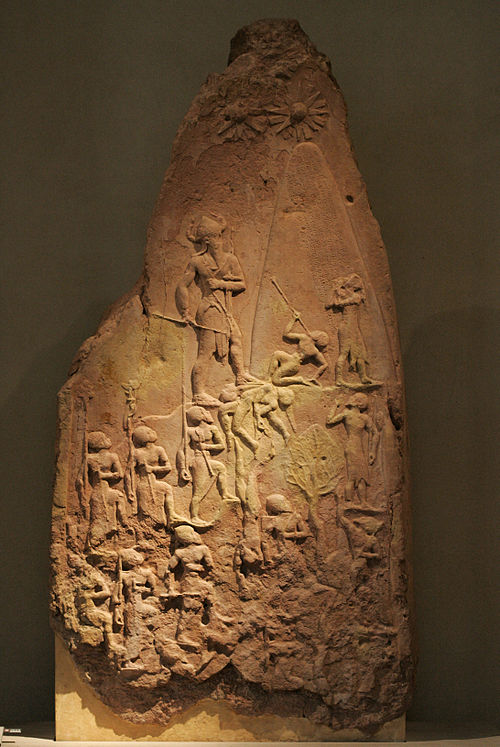
The victory stele of Naram-Sin of Akkad, the first king to claim the title of King of the Four Corners, depicts the king with a horned helmet (symbolizing divinity) and twice as large as his soldiers, standing on a mountain that reaches the heavens. The stele is today housed in the Louvre, Paris.